A wind-exposed tree can make fall preparation feel urgent. Removal deserves consideration when defects, targets, and site conditions create concern, but wind exposure alone doesn’t settle the decision.
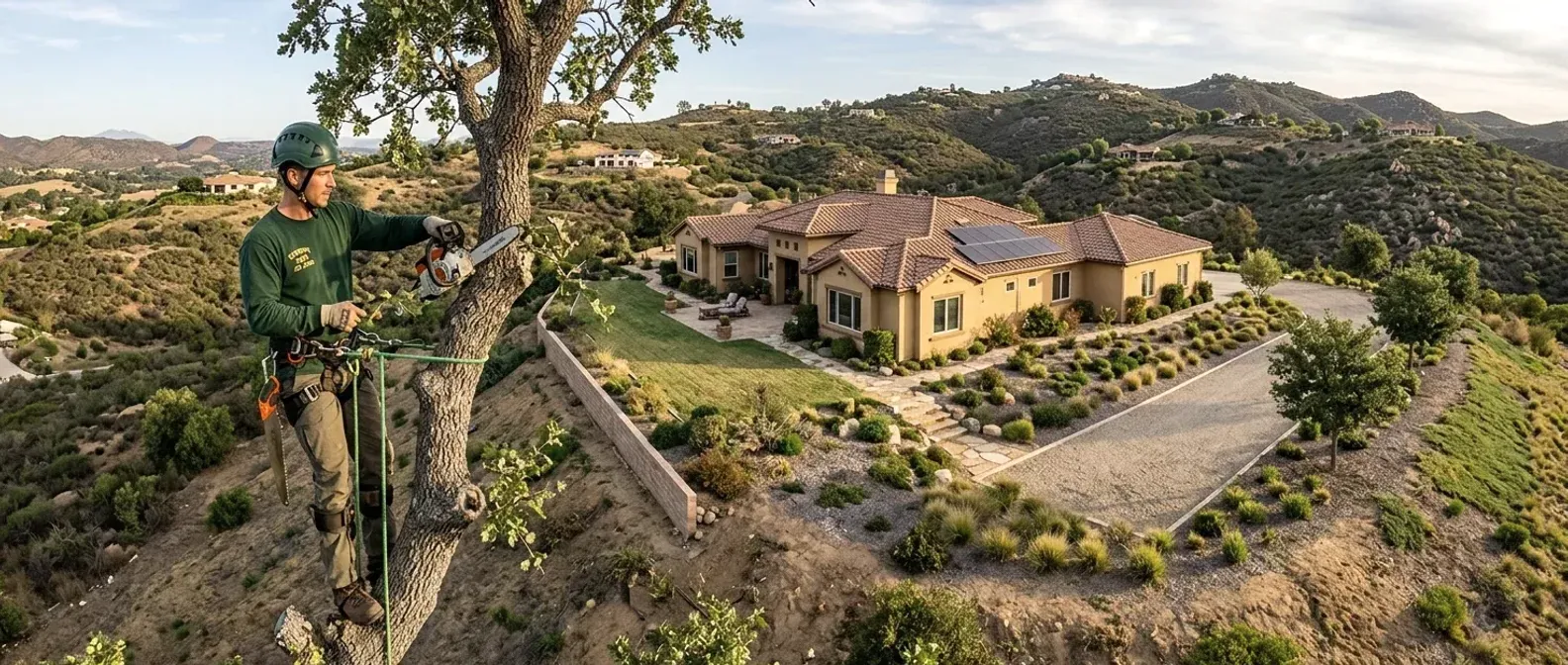
The right starting point is an assessment of the actual tree. That means its roots, trunk, branch structure, surroundings, and recent changes. Homeowners seeking tree removal in Poway should also confirm who controls the tree and whether city approval applies.
Which warning signs call for a professional assessment
A recent change matters more than an old feature viewed alone. Fresh soil lifting near the trunk, visible root movement, an opening crack, or a newly hanging limb deserves prompt attention. Keep people away from the affected area while arranging an assessment.
A tree’s lean isn’t proof that it will fall. Many trees grow at an angle for years. Concern rises when the lean is new or accompanies disturbed soil, root movement, or trunk damage. Compare current conditions with older photographs when available. Don’t dig around the roots to investigate.
Cracks between major stems also need context. The professional should examine whether the opening is active, what wood remains, and what could be struck. A cavity, dead branch, or sparse canopy can inform that review. None proves that removal is the only answer.
Species and pests add another layer. Crown thinning or bark staining on an oak doesn’t confirm goldspotted oak borer. A qualified assessment must distinguish insect damage from drought stress, root injury, and other causes. Canary Island date palms with unusual crown decline also need identification because South American palm weevil is established in San Diego County.
Our guide to signs that a tree may fall explains how to document changes safely. For a written condition review or a difficult keep-versus-remove decision, request an arborist consultation. Confirm whether the scope includes testing, photographs, or a written report before hiring.
If branches touch electrical conductors, don’t approach them. Contact SDG&E and follow its instructions. For a downed line, stay away and call 911 and SDG&E from a safe location.
How Poway slopes and wind exposure affect the plan
Poway’s inland slopes can expose different parts of the same property to different winds. A tree near a ridge, canyon edge, retaining wall, or cut slope needs a site-specific review. The street address alone won’t show how wind reaches the canopy.
The assessor should study the tree from more than one safe viewpoint. Important details include the direction of any lean, root-zone changes, drainage, surrounding grade, and recent construction. A driveway cut, trench, wall project, or compacted work area may matter because root injury and soil compaction can contribute to delayed decline or instability.
Targets also change the decision. A branch over an unused corner presents a different problem from one above a bedroom, driveway, patio, or neighboring structure. Sometimes moving a target is practical. A parking location, play area, or outdoor seating arrangement may be changed while the tree receives further evaluation.
Santa Ana forecasts are a reason to finish safe preparations early. They aren’t a reason to climb, prune, or pull a tree during strong winds. Secure movable outdoor items before conditions worsen. Keep people away from damaged trees and overhead lines.
Avoid last-minute canopy stripping. Removing excessive foliage can reduce a tree’s energy reserves and create new structural problems. “Wind sail reduction” is too vague to serve as a pruning specification. The written scope should identify the exact objective and proposed branches.
For broader seasonal planning, see the guide to thinning trees before Santa Ana winds. Thinning isn’t automatically required, and it shouldn’t be sold as storm-proofing. The actual tree, defect, target, and remaining risk should guide the recommendation.
When pruning may remain a reasonable option
Removal isn’t the default answer for every large or wind-exposed tree. Purposeful pruning may remain reasonable when the identified concern can be reduced without leaving an unacceptable condition. The recommendation should name the concern and explain what the proposed cuts address.
Dead or broken branches may be removed when access and tree condition allow. Selective reduction can sometimes shorten a specific overextended limb while preserving the tree’s natural form. Structural work may also address competing attachments, but mature trees need conservative planning. Large cuts can create their own consequences.
Topping is different from careful reduction. Cutting branches back to stubs or inadequate lateral branches can stress the tree, expose tissue, and encourage weakly attached sprouts. Lion-tailing, which strips interior and lower foliage while leaving growth at the ends, can also harm structure.
The amount of live foliage removed should reflect species, age, health, and purpose. A percentage shouldn’t be treated as a yearly target. Each cut needs a reason. A professional may also recommend monitoring rather than immediate cutting when the observed condition doesn’t justify intervention.
Pruning isn’t always the better choice. Removal may deserve stronger consideration when useful pruning can’t address the defect, when root anchorage is compromised, or when the remaining risk conflicts with how the area is used. Replacement may also be discussed when preserving a badly compromised tree would require repeated intervention without meeting the owner’s goals.
Ask for alternatives in writing. A useful proposal distinguishes removal, pruning, supplemental support, monitoring, and target relocation. It should also describe what risk will remain. Our tree removal service page explains the information an independent provider may need before recommending a method.
Individual ISA credentials can be checked through Trees Are Good. Certification belongs to the named individual. It isn’t a contractor license or proof that every employee holds the same credential.
What access and nearby structures mean for removal
Tree condition answers whether removal deserves consideration. Access determines how a qualified company may plan the work. A sloped Poway lot can require careful evaluation of gates, driveways, walls, utilities, neighboring property, and equipment position.
Start with the route from the street. Measure gates and note tight turns, steps, irrigation equipment, septic features, overhead lines, and delicate paving. Tell the estimator about known underground tanks, voids, or utilities. Don’t assume public utility markings identify every private line or show exact depth.
Ground support matters when lifting equipment is considered. Slope, soil firmness, drainage, and underground conditions affect setup. Mats or supporting materials may be part of a plan, but they don’t guarantee that a surface won’t be affected. The provider should select equipment after inspecting the property.
A crane isn’t automatically necessary because a tree is tall or close to a house. The company may consider climbing, rigging, aerial access, crane assistance, or another controlled method. The proposal should explain the selected method and identify staging areas.
Nearby structures shape the sequence. Roofs, fences, pools, retaining walls, and neighboring yards can limit drop zones. If access through another property is proposed, settle permission before work begins. A fence line also isn’t reliable proof of the legal boundary.
Ask who handles wood, chips, stump work, final grade, and landscape protection. Tree removal and stump grinding are separate scopes unless the written proposal says otherwise. Specify whether logs remain, whether hauling is included, and which areas must stay accessible.
Pricing can’t be inferred from height alone. Access, rigging, condition, targets, debris handling, and equipment needs all affect a provider’s quote. Compare written scopes instead of choosing from a verbal total. Confirm exclusions before authorizing work.
Where to verify current permit requirements
Permit questions begin with jurisdiction, ownership, and tree status. A Poway mailing address doesn’t establish every condition affecting the parcel. Confirm the actual address and project with the responsible city department before removal.
Poway Development Services issues private-tree removal permits in defined situations. Current city provisions address native or heritage trees. They also address living trees above the stated diameter on commercial or industrial property. Native species named by the city include coast live oak, canyon live oak, Engelmann oak, and California sycamore.
Heritage status is a separate designation. A large or mature tree isn’t automatically a heritage tree. Development approvals, required landscaping, and an existing tree plan can add other conditions. Public trees follow the city’s Public Works process.
Don’t treat a homeowner’s hazard concern as automatic permission to remove a regulated tree. Ask the city to confirm the tree’s status and the required path. The relevant Poway provisions are available through the city’s published tree regulations. Rules can change, so verify the current requirements for the address and scope.
Our San Diego tree-removal permit guide explains why city, county, right-of-way, and development rules shouldn’t be mixed together. The independent provider’s availability doesn’t replace city authorization.
Contractor credentials are a separate check. Search the business or license number through the California Contractors State License Board. Review the active status and classification appropriate to the proposed work. Current C-49 holders and valid legacy C-61/D-49 holders can both appear in California tree work, so don’t reject a contractor based only on expecting one classification label.
Ask the provider for current insurance information and read the written scope. An insurance certificate isn’t the policy itself, and coverage remains subject to the policy’s terms and exclusions.
When to call us
Removal needs a licensed Tree Service pro when a large tree, active defect, difficult slope, nearby structure, or utility conflict puts the work beyond safe ground-level care. Call us at (858) 400-4587 and we’ll connect you with a licensed local tree company.