A strong-wind forecast isn’t a reason to thin every tree. In El Cajon, the first decision is whether visible branch or root conditions need professional inspection. Pruning may help with a specific defect, but it can’t guarantee that a tree won’t fail.
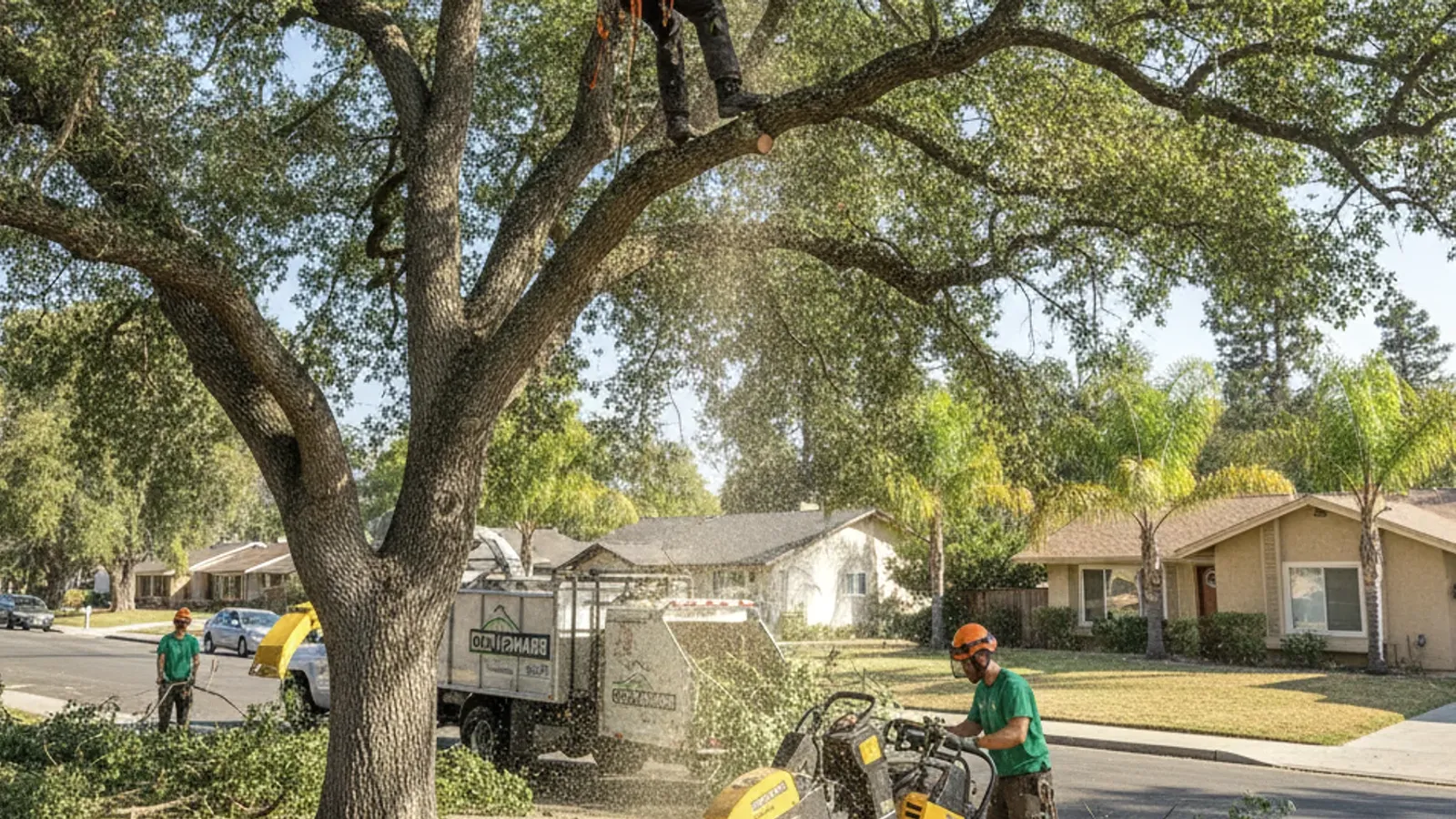
Which branch conditions deserve an inspection
Start with changes you can see from a safe place. Don’t climb, shake branches, or stand beneath damaged wood. A ground-level inspection can still reveal conditions that deserve a closer look.
Watch for a hanging limb, a fresh split, or recent branch movement. Check whether a crack has opened where two large stems meet. Look for broken wood lodged above a driveway, patio, sidewalk, or roof. A branch over an occupied area deserves more attention than one over open ground.
The base of the tree matters too. Fresh soil lifting near the trunk may indicate root movement. New leaning, exposed roots, or movement at the root collar also need assessment. Keep people away when the tree or surrounding soil is actively shifting.
Dead foliage alone doesn’t identify the cause. Drought stress, excessive moisture, pests, root injury, and disease can produce overlapping symptoms. A coast live oak, eucalyptus, queen palm, or pine also needs species-specific evaluation. The same visible symptom can carry a different meaning on another tree.
Inspection doesn’t automatically mean removal or heavy trimming. A professional should consider the species, branch attachment, wood condition, root stability, and nearby targets. The goal is to identify the actual concern before choosing cuts.
Our El Cajon tree service referral page covers local matching for several tree-care needs. For work focused on damaged, dead, or poorly placed branches, review the scope of tree trimming and shaping before requesting a quote.
How El Cajon’s inland exposure changes the check
El Cajon’s inland heat can leave trees facing different stress than coastal trees under frequent marine influence. Actual conditions still vary by property. Irrigation history, drainage, soil disturbance, reflected heat, and recent construction can all change how a tree responds.
Santa Ana winds add another concern. Dry winds can expose existing defects, but a forecast doesn’t prove that a healthy-looking tree needs immediate pruning. Wind direction and speed also vary by location. Use the local National Weather Service forecast for the property rather than relying on a countywide headline.
Review what surrounds the tree. Note homes, vehicles, play areas, utility lines, fences, and public walkways. A professional uses those targets when evaluating the consequences of possible branch failure. Moving a portable target may sometimes reduce exposure without cutting the tree.
Property jurisdiction also matters in El Cajon. A mailing address doesn’t always establish whether the parcel lies inside City limits. Confirm the parcel before relying on a city rule or maintenance program.
Inside the City, El Cajon Public Works handles parkway-tree pruning. Property owners shouldn’t independently trim or remove those trees. Report the concern to the City so staff can determine responsibility. A backyard tree and a tree between the sidewalk and street can follow different paths.
Power-line conflicts also require separate handling. Don’t touch a branch, tool, ladder, or tree that could contact electrical lines. Contact SDG&E and follow the utility’s direction before arranging ordinary tree work.
For more forecast-focused planning, read our guide to thinning trees before Santa Ana winds. It explains why tree condition and pruning purpose matter more than blanket canopy reduction.
Why removing too much canopy can create problems
A dense-looking canopy isn’t proof that heavy thinning is needed. Mature trees depend on healthy foliage for energy. Removing too much live growth can reduce those reserves and expose previously shaded bark and branches.
Over-thinning can also concentrate foliage near branch ends. This practice is often called lion-tailing. It changes the tree’s natural structure without correcting the underlying attachment or root concern. Emptying the canopy’s interior isn’t the same as selective structural pruning.
Topping creates another problem. Cutting large limbs back to stubs or unsuitable lateral branches can stress the tree. It may also lead to weakly attached new sprouts. Appropriate crown reduction is different because each cut follows a defined objective and preserves suitable branch structure.
Palm care requires another approach. A palm has one main growing point. Healthy foliage generally remains unless a specific clearance or safety need supports removal. Aggressive high cuts don’t create a stronger palm, and climbing spikes permanently wound a living trunk.
The right amount of foliage removal depends on species, age, condition, and purpose. ISA guidance treats canopy percentages as general limits, not automatic targets. Mature trees often need less removed. Each proposed cut should have a reason.
Ask the professional to identify the branches and explain the intended result. “Thin the whole tree” is too vague for a work order. A better scope might address a broken limb, interfering branch, weak attachment, or defined clearance need.
Our San Diego pruning calendar describes species-specific timing differences. High winds and active hazards don’t always follow a preferred pruning season, so separate urgent risk assessment from routine maintenance.
When structural pruning may fit the tree
Structural pruning focuses on branch arrangement and attachment. It isn’t a promise that the tree will survive every wind event. The work aims to address defined defects while retaining useful live foliage.
A young tree may benefit from progressive training. The professional may identify competing stems, damaged branches, or growth that conflicts with the future canopy. Small, purposeful cuts can reduce the need for larger cuts later.
A mature tree requires more restraint. A codominant union doesn’t automatically mean failure is certain. Its shape, included bark, movement, decay, branch load, and nearby targets all matter. Removing a large stem may create a wound or shift the canopy in ways that need consideration.
Selective reduction may fit a long branch over a roof or driveway. The chosen lateral branch must be suitable for the objective. Randomly shortening branch ends doesn’t create the same result. Deadwood removal may also be appropriate when falling material threatens people or property.
Some trees need options beyond pruning. Cabling or bracing may support certain weak attachments, but supplemental support can’t eliminate failure risk. These systems also need an inspection and maintenance plan. Root movement or unstable anchorage requires separate assessment because a crown cable doesn’t correct failing roots.
In other cases, moving a target may be the least invasive choice. A seating area, parked vehicle, or play equipment could sometimes be relocated. Removal may become appropriate when the remaining risk is unacceptable, but species identity or an old lean alone doesn’t settle that decision.
Review structural pruning services when the concern involves branch architecture rather than cosmetic shaping. The independent provider should confirm whether trimming, structural pruning, support, monitoring, or removal fits the actual tree.
What to ask before hiring a tree crew
Get the proposed work in writing. The scope should name the tree, identify the planned branches, and state the pruning objective. It should also cover cleanup, access, equipment placement, and responsibility for any required authorization.
Ask how the company evaluated the tree. The answer should address species, branch attachments, visible defects, root conditions, and nearby targets. A provider shouldn’t prescribe broad canopy thinning without connecting it to observed conditions.
Verify the contractor through the California Contractors State License Board. Check the current status and classification appropriate to the work. California recognizes the current C-49 classification and valid legacy C-61/D-49 classifications, so don’t reject a contractor based only on the older label.
Ask for current insurance information that applies to the project. A certificate isn’t the policy and doesn’t expand its coverage. Resolve questions directly with the insurer or issuing representative.
ISA Certified Arborist is an individual professional credential, not a California contractor license. If an arborist assessment matters, ask who will inspect the tree and whether a written report is included. You can review credential resources through Trees Are Good, but an absent directory listing doesn’t by itself disprove certification. The individual can provide a digital certificate for verification.
Clarify whether utility coordination or municipal approval applies before work begins. Parkway trees should go through El Cajon Public Works. Electrical conflicts should go to SDG&E first. Trees on private property may still involve easements, development conditions, wildlife, or property-line questions.
Finally, compare the actual scope rather than vague promises. Ask which branches will be cut, what will remain, and why. Confirm debris handling, protection of nearby property, and any follow-up inspection recommended by the independent provider.
When to call us
Call when visible branch defects, root movement, hanging wood, or threatened targets need assessment by a licensed Tree Service pro. Limb SD matches homeowners with licensed, independent local tree companies, and the customer hires and pays the provider directly. Call us at (858) 400-4587 and we’ll connect you with a licensed local tree company.