Stump grinding in San Diego County: depth, roots and utilities
Grinding chews a stump down below grade and leaves most of the roots in the ground. How deep to go depends on what happens on that spot next: lawn, a path, pavers, or a new planting. Some species can send up shoots from their roots even after a good grind. Limb SD matches San Diego County property owners with licensed and insured independent tree pros. You agree on the scope with the pro you hire, then pay them directly.
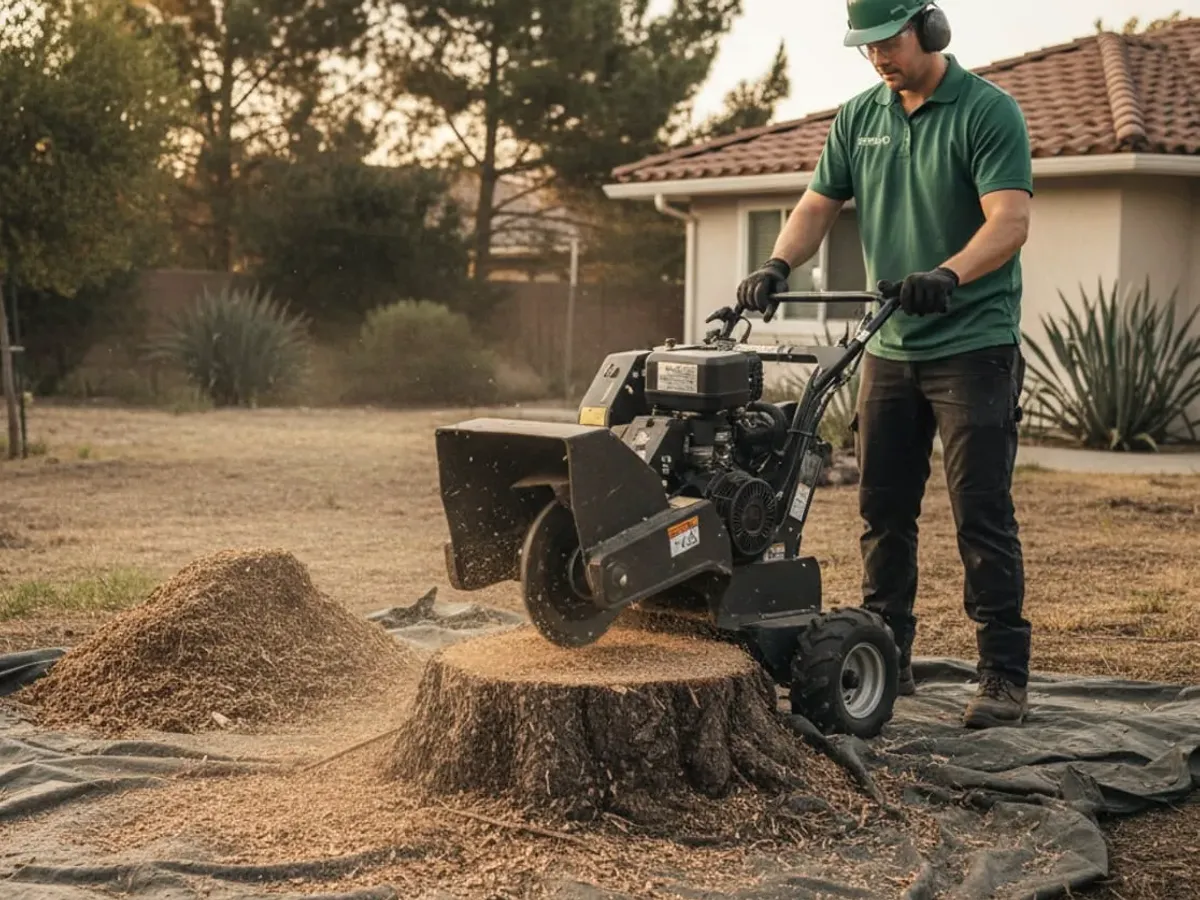
What to settle before the stump grinding starts
- Target grind depth written as a number of inches below finished grade
- Surface roots called out as a separate line, not bundled
- Gate clearance, slope, hardscape, and machine access mapped out
- A backup plan when a powered grinder cannot reach the stump
- Chips: left in the hole, relocated, or hauled, stated in writing
- Backfill and finish grade treated as a distinct task
- Utility-owned lines marked through DigAlert at 811 before any powered work
- Private gas, irrigation, lighting, and pool lines located separately
- Species named, with a plan if shoots come back from the roots
When is stump grinding the right call?
- A felled tree left behind a stump in a lawn or bed
- The stump sits where a path, patio, or driveway is planned
- A raised stump catches feet or mower blades
- Shoots keep coming up from the old stump and roots
- The lot is being readied for hardscape, a pool, or a foundation
- An oak came down for borer damage and its stump is still in the ground
- A new planting plan calls for a different root zone layout
San Diego rules and conditions that change the job
Decide what the ground will do next before you collect quotes. Lawn, pavers, a planting bed, and a slab each change the depth and the cleanup. Pulling the stump and root mass out is a separate scope with its own excavation.
In San Diego County, add three checks: whether the stump sits in a City or County right-of-way, whether the tree was an oak lost to goldspotted oak borer, and whether the species resprouts from its roots. Limb SD matches you with a licensed and insured independent pro, and you agree on scope and price with that pro directly.
How deep should a stump be ground?
UC's wildland weed guidance says to keep grinding until the hole is at least 4 inches below ground level to prevent resprouting, then fill it with soil and wood chips. That number is about regrowth, not your finished surface. Turf, a shrub bed, pavers, and a new tree each want a different cut.
Put the depth in inches in the written scope, measured from finished grade. Ask who handles roots that surface past the cut, where the chips go, and who sets the final grade. Ask how much settling to expect if a patio or path will sit on top. UC's own stump grinding method page also warns against heavy equipment on wet or muddy soil because it compacts the ground.
Will the stump grow back?
Some species resprout from their roots even after a good grind. UC names Acacia, Mayten, and Tree of Heaven as resprouting vigorously from extensive lateral roots, and says grinding may not be effective for these difficult species. If your stump came from one of them, ask the pro what the plan is when shoots return.
The same UC page says grinding targets mature plants, so young shoots and seedlings may need a second method. Our guide on why a cut stump keeps sending up shoots covers what to watch for.
What if the tree was an oak killed by goldspotted oak borer?
UC IPM reports that goldspotted oak borer has been killing oaks in San Diego County since at least 2000, and that it prefers red oaks such as coast live oak. When an infested tree comes down, UC says to cut the stump flush to the ground, because larvae can survive and develop in stumps of cut trees for at least a year.
UC also says the simplest way to handle infested oak wood is not to move it off the site. Tell the pro up front if the tree came down for borer damage, and ask how the wood and chips will be handled. Our tree health diagnosis page explains how borer damage gets confirmed.
Who marks the utility lines before grinding?
SDG&E advises contacting DigAlert at 811 or digalert.org at least two working days before digging, and says DigAlert arranges to locate and mark underground utility-owned lines for free. A gas line you own, typically the run from the meter to your appliances, needs a qualified professional to locate it.
California's one-call law defines excavation as any operation in which earth, rock, or other material in the ground is moved, removed, or otherwise displaced by tools or equipment. Whether a particular grind falls under that is a question for DigAlert and the pro, so ask who is placing the ticket and for which date. Irrigation, landscape lighting, and pool plumbing are not utility-owned, so point out any you know of before the grinder starts. Read SDG&E's tree safety guide for the utility's wording.
Is the stump in a street parkway?
A stump between the sidewalk and the street may not be yours to grind. The City of San Diego says street tree removal requests go through its Get It Done app, and that when City contractors remove a street tree the work includes full stump grinding. The City also says removal can take up to 48 months from the determination date, and that a resident may request a No-Fee Permit for trimming, removal, planting, or root pruning after inspection by City staff. Details are on the City's tree maintenance page.
Planting a replacement street tree needs a City-approved permit as well. For a tree in a County road right-of-way, County Public Works asks you to call (858) 694-3850 to find out whether the tree is your responsibility. Other cities in the county set their own rules, so ask your city's public works office before anyone cuts.
Which license covers stump grinding?
The California Contractors State License Board lists stump grinding among the duties of its C-49 Tree and Palm classification, alongside pruning and tree removal. Ask the pro you hire for a license number and look it up on the CSLB classification page and license lookup before you sign. Limb SD matches you with licensed and insured independent pros, and you hire and pay the pro directly.
Stump grinding questions San Diego property owners ask
Is grinding the same as full stump removal?
No. Grinding takes the stump down to a chosen depth and leaves most of the root system in the soil. Full removal pulls the stump and root mass out with excavation. The right choice depends on access and on what will go on top. If a slab or foundation is planned, ask the engineer or builder whether remaining wood and roots are acceptable.
How deep should the grind go?
UC's guidance for stopping resprouting is at least 4 inches below ground level. Your finished surface may need more. Turf, a new shrub, pavers, and a slab all want different cuts. Put the target depth in the written scope, and clarify who handles remaining roots, chips, fill, and settling.
What happens to the chips?
Chip handling should be a written line, not an assumption. Options usually include leaving them in the hole, piling them on site, or hauling them off. Ask whether the hole will hold chips or imported fill, and who handles the final grade.
How do utilities get marked before grinding?
SDG&E says to contact DigAlert at 811 at least two working days before digging, and DigAlert locates and marks utility-owned underground lines for free. Lines you own, such as gas past the meter, irrigation, or lighting, are not utility-owned, so ask the pro how those get located. Marks lower risk, they don't replace a sound work plan.
Can a grinder reach a tight backyard?
Reach depends on the actual opening, slope, turns, stairs, paving, and ground firmness. Don't trust a published machine width. Walk the full path and flag surfaces that need protection. If a grinder cannot reach, weigh a smaller unit, hand digging, redesigning the layout, or leaving the stump.
Why isn't stump grinding priced per inch?
Trunk diameter is only the start. A 24-inch stump behind a 32-inch gate is a different job from the same stump at the curb. Add the depth needed for turf, planting, or a slab, plus exposed roots and debris handling, and the quote changes again.
Will the stump sprout again after grinding?
It can, depending on the species. UC names Acacia, Mayten, and Tree of Heaven as resprouting vigorously from lateral roots, and says grinding may not work well on them. Ask the pro to name the species and say what happens if shoots return.
How a Limb SD referral works for stump grinding
Limb SD connects property owners with independent tree pros who are licensed and insured. We don't do the work, quote prices, or offer guarantees.
Call (858) 400-4587 with your address, the tree, what you want done, and how a crew gets to it. The pro you're matched with confirms their schedule, the site visit, the scope, and the price. You hire and pay that pro directly.
Tree service by city
Each city guide covers the local tree rules, fire authority, and site conditions that shape the job there.
All 19 city guides
Looking for stump grinding help within San Diego County?
Give us a call and explain the situation. Limb SD will match you with an insured, licensed independent pro you contract and pay on your own.