Tree pruning in San Diego County: structure first
Pruning shapes how a tree is built. It deals with how branches attach and how weight travels through the trunk, mostly on young trees and trees topped in the past. Trimming handles clearance and deadwood. A written pruning plan should state the goal, list each meaningful cut, and keep working foliage. Limb SD refers homeowners to licensed and insured independent tree professionals. You hire and pay the pro you get matched with.
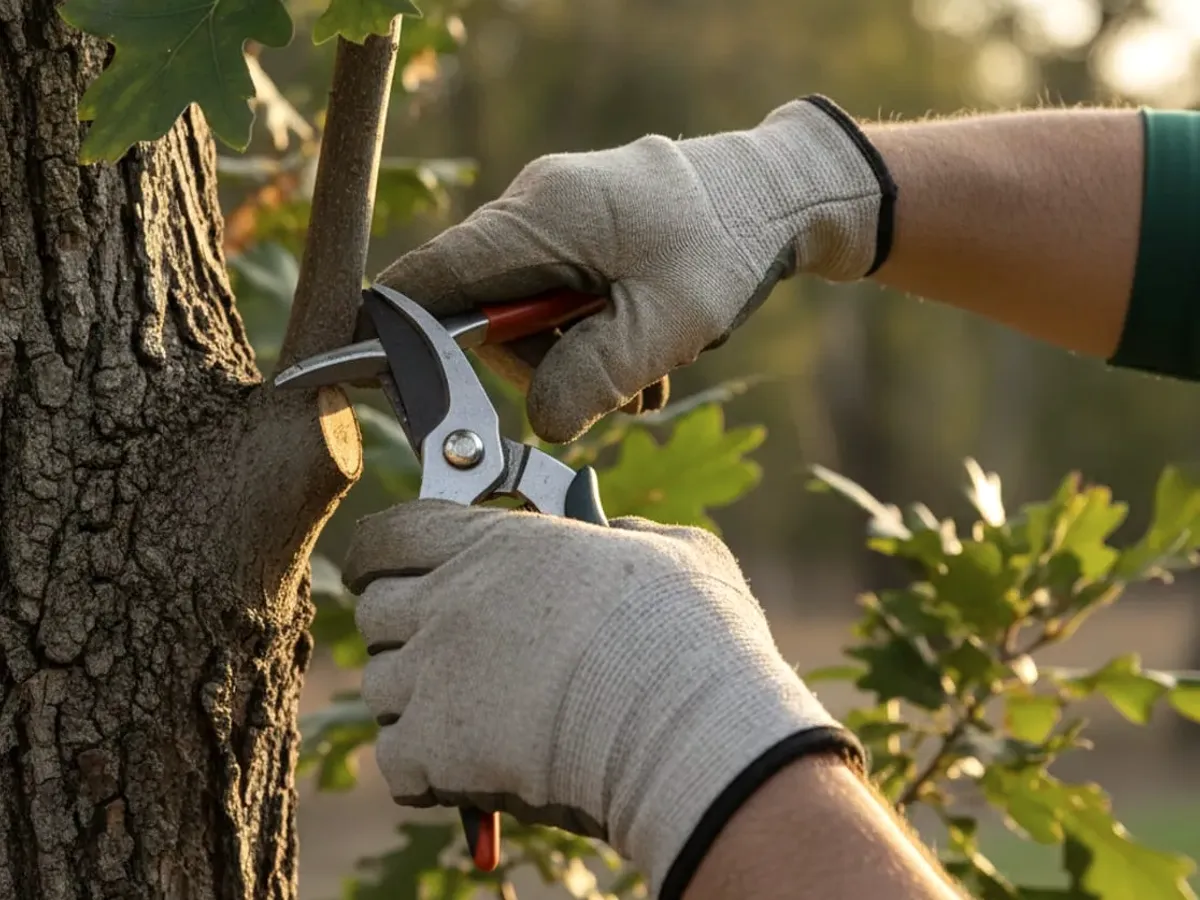
What to settle before the tree pruning starts
- Pruning goal written down before any cut happens
- Codominant stems flagged, with a plan to remove or shorten all but one while the tree is young
- Branch unions with included bark marked for pruning while the branches are small
- Branches that cross, rub, are dead, or are damaged flagged for action
- Long or heavy limbs reviewed for reduction to a branch big enough to take over
- Lowest permanent branch height and spacing chosen for the tree's job
- Mature trees pruned only when a cut has a stated purpose
- Live canopy removed kept within ISA's guideline, with the reason noted
- Written pruning spec for homeowners and property managers, citing ANSI A300 if you want a standard
When is tree pruning the right call?
- A young tree is putting on competing trunks or tight branch unions
- A tree planted in the last few years needs its first real structure pruning
- A long limb reaches over a building, path, or spot people use
- Crossing branches are wearing into each other
- Earlier topping left a flush of weakly attached shoots
- A storm altered the tree's branch layout
- A bid calls for heavy canopy removal with no clear reason given
San Diego rules and conditions that change the job
In San Diego, trimming and structural pruning often get sold as the same yearly service. They are different jobs. Clearance and deadwood work is one thing. Working through competing leaders, included bark, and end-weight on a young or topped tree is something else. Ask the written spec to name the goal and the cuts, not a canopy percentage treated as a yearly target.
If a bid promises a thinner, safer tree by taking off a set percentage, ask which branches stay and what new shoots those cuts will trigger. Ask who owns the tree too. City street trees follow City rules, and our tree trimming page covers that process.
What does pruning a young tree involve?
ISA calls proper pruning essential to developing a strong structure, and says trees pruned well while young need less corrective pruning later. The goal is a strong, central trunk with sturdy, well-spaced branches, led by a single dominant leader. ISA says not to cut back the tip of that leader or let side branches outgrow it.
Two or more near-equal leaders are called codominant stems. ISA says they can lead to structural weakness and that it is best to remove or shorten all but one while the tree is young. Narrow branch angles can trap bark inside the union. ISA calls that included bark and says to prune weak attachments while they are small.
For a new planting, ISA advises limiting early pruning to dead or broken branches until the second or third year. Read the ISA young tree brochure before you approve a first-year plan.
How much can come off a mature tree?
ISA gives a general ceiling of 25 percent of the crown at once, and less for mature trees. It also says heavy pruning of live tissue just after the spring growth flush should be avoided, especially on weak trees. That is a limit, not a goal.
For height or spread, ISA's reduction method cuts back to a secondary branch at least one-third the diameter of the cut stem. Compare that to topping, which leaves stubs. For a large limb, ISA describes a three-cut method that removes weight first and avoids tearing the bark. Ask whether the crew uses it. See the ISA mature tree brochure for the full steps.
What should a written pruning scope cite?
ANSI A300 is the American National Standard for tree care operations, which the tree care trade treats as its consensus standard for best practices. Part 1 of A300 covers pruning. It's reasonable to ask the pro to name the A300 pruning practices that apply to your job and to write the goal next to each cut.
ISA says pruning that involves work above the ground or power equipment should be done by a professional arborist with a trained crew, safety equipment, and liability insurance. Limb SD matches you with licensed, insured independent pros. Confirm their license and insurance papers yourself before you sign.
Pruning or trimming: which job do you have?
If the problem is a limb over the roof or dead wood over a patio, you want tree trimming. If a young tree is forking, leaning on weak unions, or regrew from past topping, you want pruning. Many properties need both. Ask for the two goals to be listed separately.
Tree pruning questions San Diego property owners ask
How is pruning different from trimming?
Trimming usually deals with clearance, deadwood, or looks. Pruning, in the structural sense, is about how branches attach and carry weight as the tree grows. People use the words loosely, so the written scope tells you more than the label. It should spell out the goal, the branches in play, the foliage kept, and practices to avoid like topping or lion-tailing.
What's a safe amount of live canopy to remove in one pass?
ISA says no more than 25 percent of the crown should generally be removed at once, and less for mature trees. Species, age, vigor, structure, and your goal all factor in. The scope should back up each cut and remove as little foliage as the job needs.
What does pruning do for a young tree?
ISA says trees pruned properly while young need less corrective pruning later. The goal is a strong, central trunk with sturdy, well-spaced branches. If two stems compete, ISA says it is best to remove or shorten all but one while the tree is young. Included bark, where branches join at a narrow angle, is best pruned while the branch is small.
Should I prune a tree I just planted?
ISA advises limiting pruning of a newly planted tree to dead or broken branches. Other pruning waits until the second or third year, once the tree has recovered from transplanting. Ask the pro to explain any bid that calls for shaping a new tree in its first season.
Does structural pruning fix every problem a tree can have?
Not by itself. Pruning can take on competing leaders, crossing limbs, branch load, or weakly attached regrowth. It won't sort out every case of decay, root trouble, pests, or instability. Start by figuring out whether the main concern is structure, health, roots, or a conflict with the site. That call decides whether pruning, watching, treatment review, cabling, or removal comes next.
What should change about pruning on a mature tree?
Mature tree work should be modest and tied to a clear goal. ISA notes that routine thinning does not necessarily improve a tree's health, because leaves make the sugar the tree runs on. Weigh the proposed cuts, what foliage stays, and branch size. Removing one large limb can leave a wound that may not be able to close. Don't turn a guideline percentage into a standing yearly target.
How a Limb SD referral works for tree pruning
Limb SD connects property owners with independent tree pros who are licensed and insured. We don't do the work, quote prices, or offer guarantees.
Call (858) 400-4587 with your address, the tree, what you want done, and how a crew gets to it. The pro you're matched with confirms their schedule, the site visit, the scope, and the price. You hire and pay that pro directly.
Tree service by city
Each city guide covers the local tree rules, fire authority, and site conditions that shape the job there.
All 19 city guides
Looking for tree pruning help within San Diego County?
Give us a call and explain the situation. Limb SD will match you with an insured, licensed independent pro you contract and pay on your own.