A crane can help when conventional removal leaves little room for controlled tree sections. If you’re searching for crane-assisted tree removal near me, start with a site assessment, not an assumption that a crane is required.
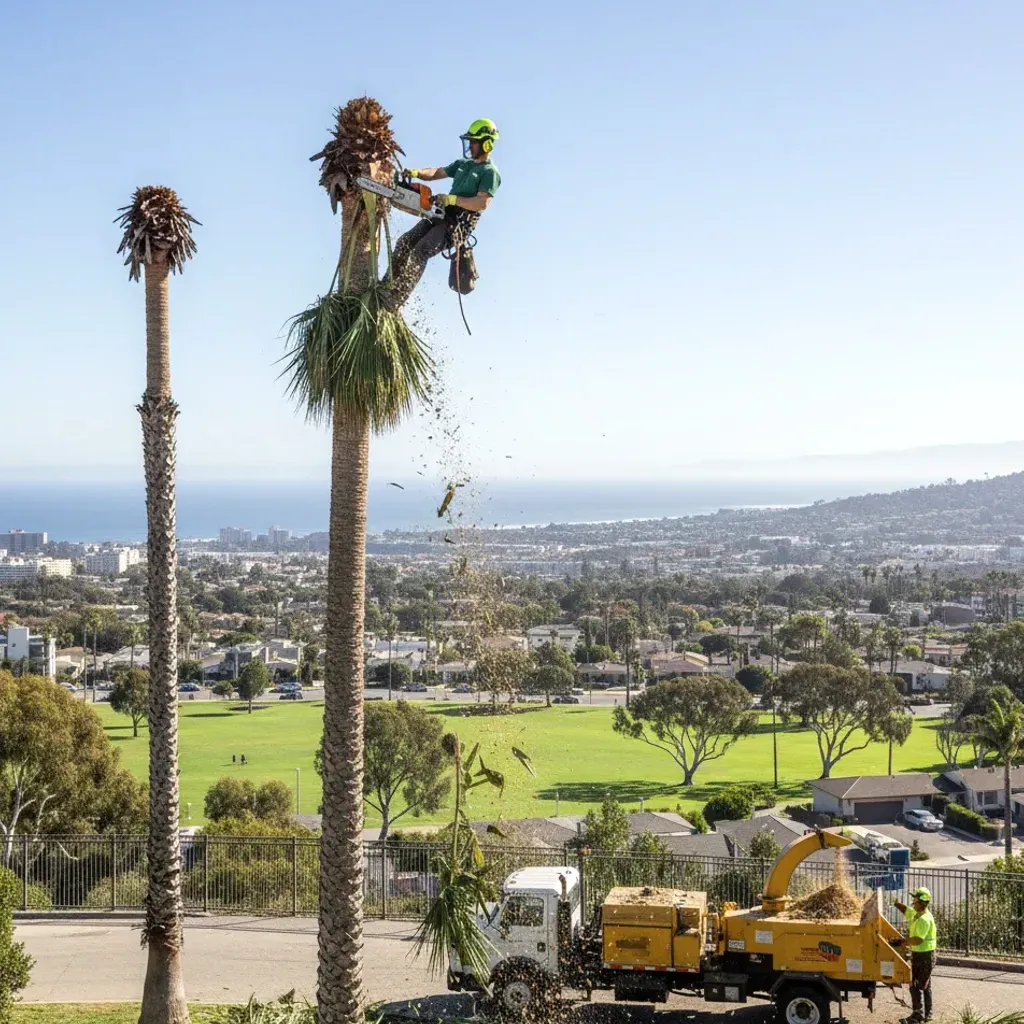
Site conditions that may lead to crane planning
Crane-assisted tree removal may fit when a crew can’t safely lower tree sections through the available space. That decision depends on the tree, surrounding targets, access, and suitable equipment placement.
A tree beside a roof may leave little room below its canopy. The same applies near a pool, retaining wall, narrow side yard, or neighboring property. A crew may consider a crane when ordinary rigging would create an unsuitable path for branches or trunk sections.
Tree condition matters too. A split stem, damaged crown, or suspected root movement can change how the crew approaches the tree. However, a crane doesn’t automatically make an unstable tree safe. The tree and its surroundings still need a qualified assessment.
Species alone don’t decide the method. A tall eucalyptus, Canary Island date palm, coast live oak, or Torrey pine doesn’t automatically require crane removal. Size, defects, branch arrangement, and nearby structures matter more than the name.
San Diego properties also vary sharply. A courtyard in La Jolla presents different access questions than a larger Poway or Lakeside parcel. Rancho Bernardo, Chula Vista, and Encinitas each include lots where gates, walls, slopes, and neighboring homes affect the available work area.
A tight site may support crane planning, but it doesn’t settle the decision. The independent crew must compare the proposed crane setup with other workable methods. Our crane-assisted removal service connects property owners with licensed local pros who can evaluate those options.
How crews assess access and lifting space
Crane planning starts at ground level. The crew needs to understand where equipment could stand, where tree sections could travel, and where each section would land.
Ground support depends on slope, firmness, compaction, and drainage. Known underground tanks, voids, and utilities also affect setup. A driveway that holds passenger vehicles isn’t automatically suitable for crane equipment. The company responsible for the work should evaluate the proposed position and follow the equipment manufacturer’s setup requirements.
Access involves more than gate width. The crew may review turns, overhead obstructions, parked vehicles, fences, landscaping, and public-space conflicts. Equipment may reach the property, yet still lack a suitable setup or exit path.
The proposed lifting path deserves equal attention. The plan should identify roofs, chimneys, utility lines, neighboring structures, and retained trees. It should also show where lifted sections would be placed for processing. Suspended material needs a planned path and controlled landing area.
Ask whether any part of the setup would occupy a street, sidewalk, right-of-way, or neighboring property. Those conditions may require permission or agency review. Requirements vary by jurisdiction and tree location, so a San Diego mailing address alone doesn’t answer every permit question.
Photos can help a company understand the site, but they don’t replace an inspection. Wide views should show the tree, structures, access route, and possible setup area. Don’t approach unstable trees or electrical hazards to get a better picture. The crew should confirm the final method after examining the property.
What happens during a crane-assisted removal
A crane-assisted removal divides the tree into planned sections. Rigging connects a selected section to the crane before the crew completes the cut. The crane then moves that section along the agreed path toward the landing area.
The exact sequence depends on tree structure and site conditions. A crew may begin with outer canopy sections before addressing larger wood. Another tree may require a different order because of defects, weight distribution, or nearby targets. Homeowners shouldn’t expect one fixed procedure for every removal.
The crane operator and tree crew must coordinate each lift. The tree must also be assessed for whether it can withstand the planned rigging forces. A green canopy doesn’t prove that the trunk, branch unions, or roots are structurally sound.
The work zone should be established before lifting begins. The written plan should identify where people, vehicles, pets, and movable property need to stay. It should also explain how the crew will handle branches, trunk sections, chips, and the remaining stump.
Crane use doesn’t guarantee zero property impact. Equipment placement, supporting materials, access, and the landing area all matter. Landscaping or hardscape protection should appear in the written scope rather than being assumed.
The scope should also distinguish removal from related work. Stump grinding, hauling, final grading, and replacement planting may be separate items. Our general tree removal service can help when the method hasn’t been selected yet. The matched company will determine whether crane assistance belongs in its proposal.
Questions to ask about the removal plan
A good proposal explains why the company recommends its method. It shouldn’t rely on phrases such as “tight access” without showing what that means for your property.
Ask these questions before signing:
- Why does this tree warrant crane planning?
- Which alternatives did the company consider?
- Where will the crane stand?
- What ground conditions were evaluated?
- What route will lifted sections follow?
- Where will branches and trunk sections land?
- Will equipment cross a sidewalk or neighboring property?
- Who handles any required permissions?
- What protection is proposed for roofs, paving, and landscaping?
- Does the scope include hauling and stump work?
- What conditions could change the written plan?
- Who is responsible for restoring the setup and landing areas?
Verify the independent contractor through the CSLB license lookup. Check the current status and classification appropriate to the work. Ask how the job will be staffed and request current insurance information from the company performing it.
An ISA credential belongs to an individual, not a referral brand or entire company. If the proposal relies on an arborist’s assessment, ask who performed it. You can review the individual-verification resources from ISA’s Trees Are Good program.
Compare exclusions as carefully as the main work. One quote may include debris handling while another separates it. Our guide to comparing San Diego tree removal quotes explains how to compare scope without relying on the lowest total alone.
When another removal method may fit
A crane isn’t the default answer for every tall tree or constrained yard. Another method may fit when the crew has suitable access, stable work positioning, and a controlled route for tree sections.
Depending on the site, a company may consider climbing and rigging, an aerial lift, or sectional removal without a crane. Ground-based felling may be considered only where the available area and surrounding targets support it. The responsible crew should select the method after assessing the actual property.
The decision shouldn’t rest on tree height alone. A shorter tree beside a roof can present tighter constraints than a taller tree in an open area. Likewise, a narrow gate doesn’t prove that crane use is necessary. The crane might be positioned outside the yard, or a different removal method might fit better.
Tree preservation options also deserve attention. A removal request may begin with a dead limb, clearance concern, or canopy imbalance. A qualified assessment may identify purposeful pruning or supplemental support as an alternative. Those measures don’t eliminate failure risk, and they aren’t suitable for every tree.
Permits or ownership questions can also change the plan. A street tree, designated heritage tree, HOA tree, or shared-boundary tree may involve another decision-maker. Contractor availability doesn’t create authority to remove it.
Active failure conditions require different priorities. Keep away from a moving root plate, splitting trunk, hanging limb, or tree entangled with a utility line. The San Diego emergency tree removal guide explains the first decisions without promising a private service response time.
Frequently asked questions
Does a large tree always need a crane?
No. Size is only one factor. The crew also considers defects, nearby structures, access, landing space, and available removal paths. A large tree in an open area may support another method, while a smaller tree over a roof may lead to crane planning.
Can a crane work from the street?
Sometimes, but street placement isn’t automatic. The company must evaluate reach, ground support, traffic, overhead obstructions, and the lifting path. Public-space use may also require permission from the responsible jurisdiction. Confirm those details before work begins.
Does crane assistance prevent property damage?
No removal method can promise zero impact. Crane assistance can change how sections move through a constrained site, but equipment setup and landing areas still matter. Ask for the proposed protection measures and restoration responsibilities in writing.
Is crane removal always more expensive?
No verified local figure establishes a universal price difference. Pricing depends on the tree, access, equipment plan, crew requirements, debris scope, and site restoration. Get written quotes based on the same scope and compare each exclusion.
When to call us
Crane planning belongs with a licensed Tree Service pro when a tree stands near structures, lacks a clear removal path, or has defects affecting the work plan. Call us at (858) 400-4587 and we’ll connect you with a licensed local tree company.