A palm with brown fronds doesn’t automatically need removal. The real decision depends on its species, condition, location, and the reason trimming was proposed. A qualified inspection should separate routine palm care from problems pruning can’t correct.
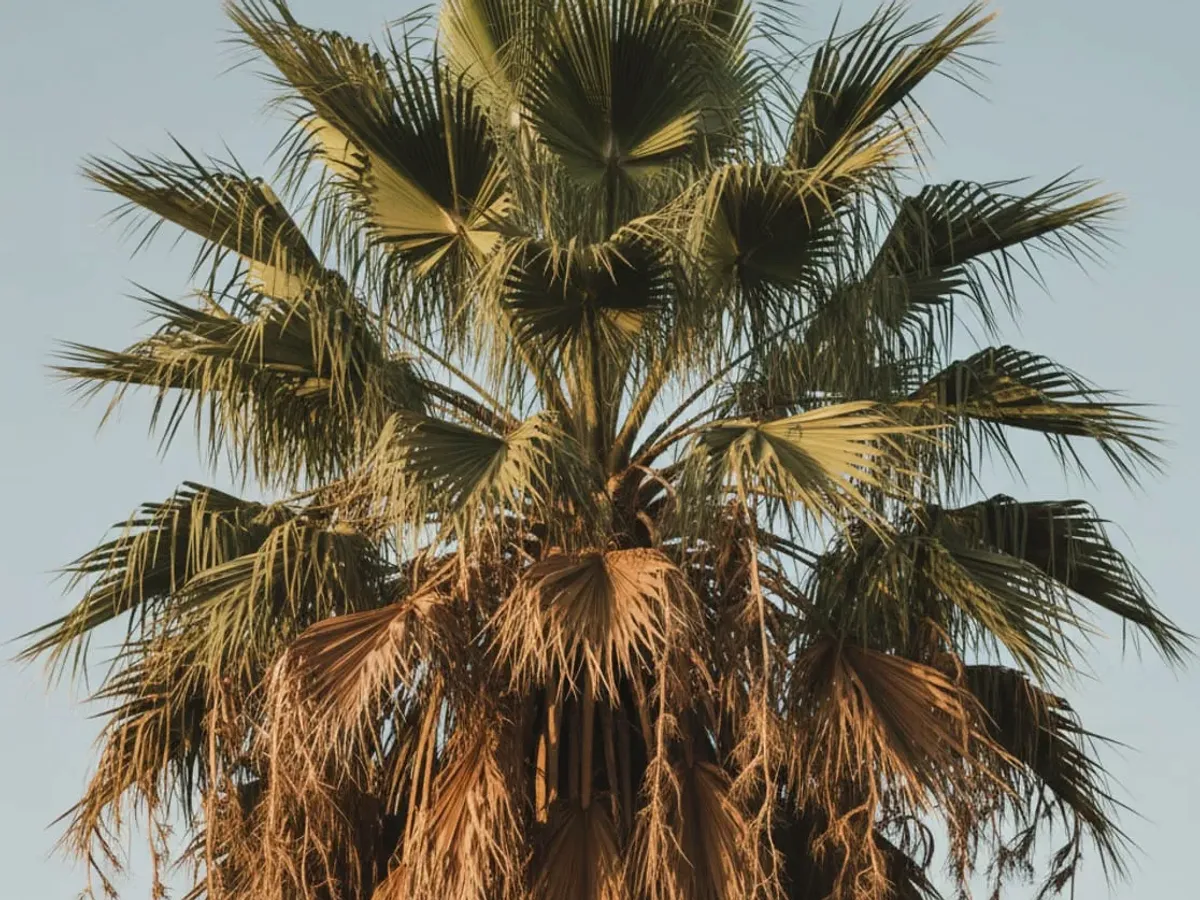
What trimming can and can’t correct
Palm trimming has a defined purpose. It can address dead or dying fronds, broken material, and selected flower or fruit clusters. It can also resolve a specific clearance issue when the proposed cuts won’t harm the palm.
That doesn’t make heavy pruning preventive medicine. Healthy foliage supports the palm. Removing too much living tissue can slow growth and increase stress. Aggressive high cuts also don’t create a longer maintenance interval.
A proper proposal should name each objective. “Clean up the palm” is too vague. The written scope should distinguish dead fronds, living fronds, fruit clusters, persistent leaf bases, and trunk work. It should also explain how the terminal bud will be protected. Damage to that growing point is fundamentally different from losing a lower frond.
Trimming can’t restore a failed growing point. It also can’t establish that hidden trunk tissue or the root area is sound. A green crown alone doesn’t rule out a structural problem. Cosmetic pruning shouldn’t replace an inspection when the crown has shifted, the trunk has changed, or the surrounding soil has moved.
Palm trunks shouldn’t be treated like ordinary bark. Climbing spikes permanently wound living palm tissue. Removing attached leaf bases or sculpting the trunk can create additional wounds. Disease concerns may also require specific tool-cleaning and debris-handling procedures.
Our palm tree trimming and removal service connects homeowners with independent local pros who can define the work. If trimming is still appropriate, the scope should preserve useful living foliage and address a real need. Our guide to pruning palms in San Diego explains those distinctions in more detail.
Which changes call for a palm inspection
A single brown frond isn’t a diagnosis. Palm decline can involve water, roots, pests, disease, physical injury, or several overlapping conditions. The useful next step is documenting changes without climbing, probing, or cutting into the palm.
Ask for an inspection when you notice a leaning or displaced crown, unusual one-sided decline, a damaged growing point, fresh trunk wounds, movement near the base, or falling material near occupied areas. A sudden change deserves more attention than an unchanged feature that has been present for years. Recent construction, excavation, irrigation changes, or impacts around the trunk also belong in the history.
Keep the observations specific:
- Note where symptoms first appeared.
- Record whether the change is spreading.
- Photograph the crown and trunk from a safe location.
- Identify nearby roofs, walkways, vehicles, and play areas.
- Tell the inspector about recent pruning or soil disturbance.
- Share any known irrigation or drainage changes.
Don’t diagnose Fusarium wilt, pink rot, or a palm weevil from color alone. One-sided leaflet death has several possible causes. A professional may need closer inspection or testing before recommending treatment, monitoring, pruning, or removal. Our guide to common palm diseases in San Diego explains why similar symptoms need different responses.
If the palm is moving, splitting, or shedding material, keep people away from the exposure area. Don’t stand beneath it for photographs. If a palm or frond contacts a power line, stay clear and contact the utility before arranging ordinary tree work.
Removal becomes a reasonable discussion when a qualified assessment finds that acceptable risk can’t be reached through pruning, support, treatment, or moving the exposed target. That conclusion should come from the palm’s actual condition, not its height or appearance alone.
How palm species affects the decision
Species identification changes the inspection. It affects normal crown form, expected leaf behavior, likely pests, and the equipment needed for access. Common names can also mislead, especially when related palms or hybrids look similar from the ground.
Mexican fan palm is Washingtonia robusta. It has fan-shaped leaves and a tapered trunk. Retained dead fronds may form a skirt, though old leaf bases can eventually shed. A skirt can create a maintenance question, but its presence alone doesn’t prove the palm should be removed. The decision still depends on crown condition, trunk condition, access, and nearby targets.
California fan palm, Washingtonia filifera, has a thicker, more columnar trunk and a more open gray-green crown. Cultivated hybrids can complicate identification. “Fan palm” isn’t specific enough for an irreversible recommendation. Our Mexican fan palm decision guide covers trimming, trunk work, and removal without treating every skirted palm alike.
Queen palm, Syagrus romanzoffiana, has arching feather leaves and no crownshaft. Queen palms aren’t self-cleaning. Dead foliage can remain attached, while partly living leaves may still support the palm. Removing every discolored frond can therefore be the wrong response.
Canary Island date palm, Phoenix canariensis, has a massive trunk, feather leaves, and sharp modified leaflets near the frond bases. South American palm weevil is established in San Diego County and kills Canary Island date palms. Severe damage may lead to crown failure. Suspected giant palm weevils should be reported to the county agricultural commissioner, but visible crown decline still needs identification before treatment or removal is chosen.
A king palm has a crownshaft, unlike a queen palm. Exact identification matters because ordinary shedding, disease clues, and safe pruning choices differ. When identification affects a major decision, ask the inspector to provide the botanical name and explain the evidence.
What nearby roofs and access mean for removal
The palm’s condition is only half the removal decision. The crew must also plan how material can be lowered, where equipment can stand, and what lies beneath the work area.
A palm beside a clear open yard presents a different project from one between two houses. Roofs, pools, solar equipment, fences, parked vehicles, overhead lines, and neighboring property can restrict the drop zone. Narrow side yards and gated access may also limit equipment choices. None of these conditions proves that a crane is required. They show why the removal method must follow a site visit.
Ground support matters when lifting equipment is proposed. The setup area must account for slope, firmness, drainage, compaction, and known underground features. Septic components, tanks, utilities, and undocumented voids can change the plan. Suitable support materials may be needed, but they don’t guarantee that the surface or underground improvements can’t be damaged.
Utility marking also has limits. Public utility members usually mark facilities they own and maintain. Private irrigation, drains, and other private lines may need separate locating. Surface markings don’t establish utility depth. The provider should know the intended stump scope before powered excavation or grinding begins.
Ask how the crew will protect each target and control each section. Confirm whether the proposal includes fronds, trunk sections, stump work, haul-off, final grade, and cleanup. These are separate scope items. Palm removal doesn’t automatically prepare the spot for a new palm, lawn, paving, or construction.
If the recommendation is removal, our tree removal service can connect you with an independent local company. Homeowners comparing project variables can also read our guide to palm removal cost factors. It doesn’t publish an unsupported local price range because access, species, condition, and scope must be assessed first.
What to verify before choosing a tree crew
Start with the person making the recommendation. Ask whether the inspection is being performed by the crew estimator, an ISA Certified Arborist, or another qualified professional. ISA certification belongs to an individual. It isn’t a California contractor license, and it doesn’t prove that every worker at a company holds the credential.
You can check an individual credential through ISA’s arborist resources. An absent directory listing doesn’t automatically disprove certification because directory details can be withheld. The individual can share a current digital certificate for verification.
For the company performing paid tree work, review its record through the CSLB license lookup. California now issues the C-49 Tree and Palm Contractor classification. Valid legacy C-61/D-49 holders may also continue operating under that classification. Check the active status and classification appropriate to the proposed work instead of relying on a logo or verbal assurance.
Also ask for current insurance information. A certificate of insurance isn’t the policy and doesn’t change its terms, exclusions, or conditions. Confirm coverage and any property-specific requirements with the insurer or other requesting party. Workers’ compensation requirements depend partly on staffing and classification, so review the current CSLB record and ask how the job will be staffed.
The written proposal should identify:
- The palm species and observed condition.
- Whether the recommendation is trimming, monitoring, treatment, or removal.
- The exact fronds or structures included in trimming.
- The removal and lowering method.
- Equipment access and ground-support needs.
- Utility, roof, pool, and neighboring-property controls.
- Stump, debris, and final-grade responsibilities.
- Any permit or property-authorization responsibility.
- Any testing, report, or continuing inspection included.
Permit requirements depend on jurisdiction, tree location, and property conditions. A San Diego mailing address doesn’t settle whether a palm sits on private land, in a public right-of-way, or within another regulated area. The City’s process for street trees doesn’t apply automatically to every private palm. Our San Diego tree service page provides a local starting point for matching the address and scope with an independent provider.
When to call us
Call when trimming no longer answers the condition, access, or risk concerns around your palm. Limb SD will match you with a licensed, independent local pro who can inspect the site and recommend an appropriate scope. Call us at (858) 400-4587 and we’ll connect you with a licensed local tree company.