A simple limb trimming request can uncover a larger structural concern. The decision depends on which branches are involved, why they’re being cut, and how each cut may affect the remaining crown.
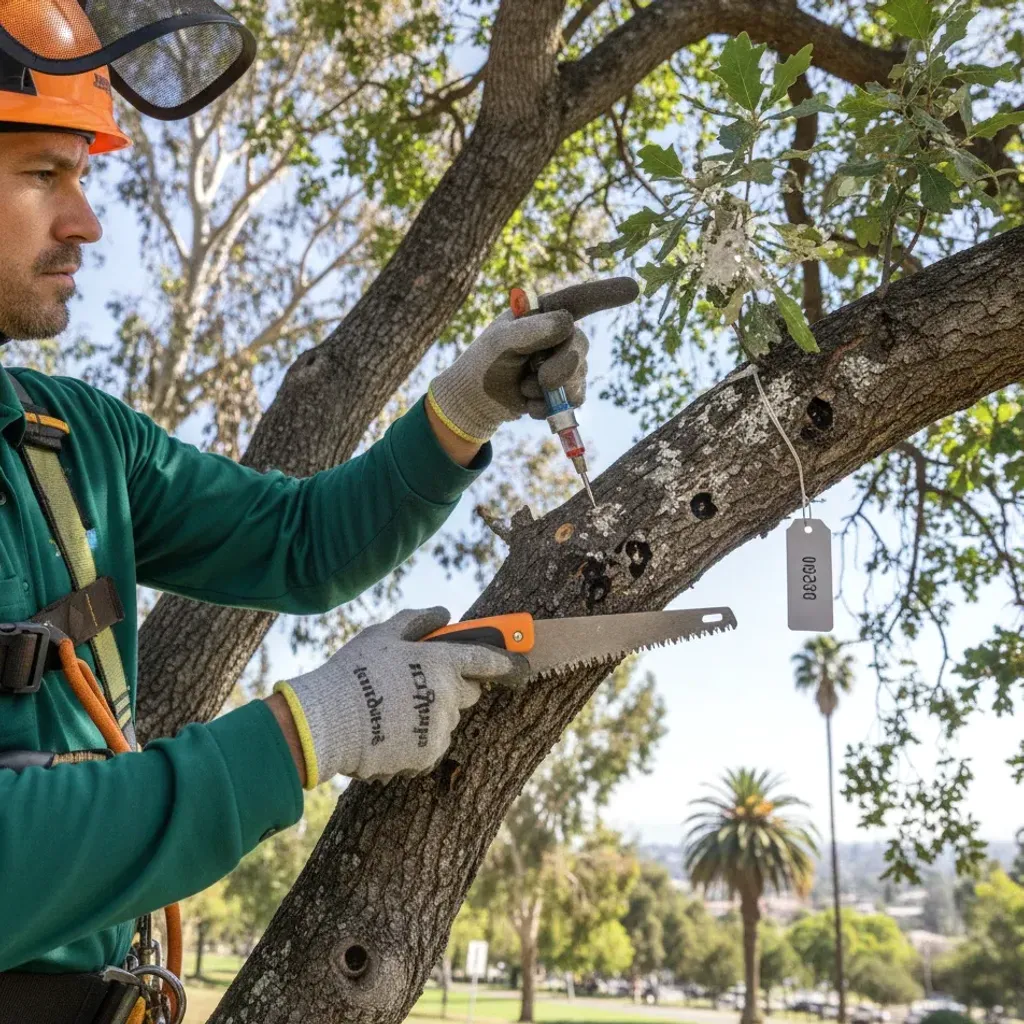
How limb trimming differs from structural pruning
“Trimming” and “pruning” aren’t completely separate technical categories. Both describe branch removal. The meaningful difference is the objective and the written prescription.
Limb trimming often starts with a specific clearance or maintenance request. A branch may touch a roof, obstruct a walkway, or hang over a driveway. The proposed scope can stay narrow when removing that branch won’t create another structural concern.
Structural tree pruning looks at how the whole crown is organized. The professional considers branch attachments, competing stems, damaged growth, clearance needs, and the tree’s response to previous cuts. The goal isn’t to remove as much foliage as possible. Each proposed cut needs a stated purpose.
That distinction matters with mature residential trees. Removing one large limb can change canopy balance, expose previously shaded tissue, or leave a substantial wound. Those possibilities don’t mean the limb must stay. They mean the decision deserves more than a broad instruction to “trim it back.”
Structural pruning also differs from topping. Indiscriminate cuts to stubs or unsuitable lateral branches can stress a tree and encourage weakly attached new growth. Appropriate reduction work is planned around the actual branch and objective.
Our structural pruning service connects homeowners with licensed, independent local pros. Ask the provider to explain whether the job is targeted clearance, deadwood removal, crown reduction, or a broader structural plan. Those descriptions are more useful than the word “trimming” alone.
Which branch patterns crews assess first
An assessment usually begins from the ground. The professional identifies the targets below the canopy, then studies the branches above them. Targets may include a home, patio, parked vehicle, walkway, pool area, or neighboring property.
Dead, broken, or hanging branches deserve attention because their condition differs from living growth. Fresh cracks, visible movement, split attachments, and displaced soil near the trunk also change the conversation. Keep people away from an actively moving or damaged tree while arranging professional help.
Crossing branches need closer review, but crossing alone doesn’t automatically require removal. The provider should determine whether the branches are rubbing, damaging bark, or simply occupying nearby space. Competing stems also require context. Their size, attachment, condition, and position matter more than a label applied from the ground.
Branches growing toward a roof or street may create a clearance problem without indicating poor tree health. Likewise, interior branches aren’t automatically unnecessary. Removing too much inner or lower foliage can produce lion-tailing, which leaves foliage concentrated near branch ends.
Common pruning mistakes come from starting with a cutting method instead of an objective. Examples include stripping interior growth, forcing every tree into one shape, removing living foliage without a reason, or treating a fixed percentage as a universal allowance.
Santa Ana wind preparation follows the same rule. Routine thinning doesn’t make a tree stormproof. Our guide to tree thinning before Santa Ana winds explains why an actual defect assessment matters more than opening the canopy by default.
Why tree age and species change the plan
Young-tree pruning and mature-tree pruning solve different problems. A young tree may allow gradual development of its future canopy. A mature tree has larger branches, established architecture, and less tolerance for unnecessary foliage loss.
Species also changes what normal structure looks like. A naturally spreading coast live oak shouldn’t be forced into the same form as a young shade tree with a central leader. A eucalyptus, palm, and deciduous fruit tree also require different biological and seasonal considerations.
Species identification matters before consequential work. Similar-looking trees may respond differently to the same proposed cut. If identification is uncertain, ask the provider to confirm it before approving major live-branch removal.
Coast live oaks add a specific San Diego concern. Goldspotted oak borer contributes to oak mortality in many parts of the county. Crown thinning, bark staining, or branch decline alone doesn’t confirm that pest. Those signs need assessment rather than an automatic diagnosis or removal decision.
Tree age changes the dose as well. The International Society of Arboriculture’s homeowner resources explain that mature-tree pruning should be purpose driven. General percentage guidance isn’t a yearly target, and mature trees may require less foliage removal.
Timing isn’t universal either. Citrus often needs little pruning. UC guidance treats apricot and cherry differently from most deciduous fruit trees because wet-season wounds can carry disease concerns. Palms have another set of considerations centered on dead or dying fronds, living foliage, fruit clusters, and the terminal bud.
Use a species-specific San Diego pruning calendar as a planning aid. Urgent hazards still need assessment when they appear, regardless of the cosmetic pruning season.
When deadwood removal may be enough
Deadwood removal may be enough when the concern is limited to clearly dead, broken, or hanging branches. It can address a defined target without turning the visit into broad live-canopy pruning.
The written scope still matters. “Remove deadwood” leaves several questions unanswered. It should identify the tree, the area being addressed, and how the provider defines the included branches. Access, debris handling, branches over neighboring property, and protection of nearby surfaces should also be discussed.
Deadwooding doesn’t correct every structural issue. It won’t resolve a moving root plate, an active trunk split, or unsuitable branch attachments elsewhere in the crown. A green canopy also doesn’t prove the trunk and roots are sound. The provider should separate visible deadwood from other conditions found during inspection.
Dead branches don’t justify stripping healthy interior growth. Routine thinning doesn’t necessarily improve tree health, and excessive foliage removal reduces the tree’s energy-producing surface. The narrowest effective scope is often the better starting point.
Homeowners searching for “deadwooding near me” should ask whether the quoted visit includes assessment or only specified branch removal. A visual pruning estimate isn’t necessarily a formal arborist report. If written findings, testing, or continuing monitoring are needed, confirm those deliverables before hiring.
For trees within the City of San Diego, ownership and location also matter. A street tree follows a different process from a private backyard tree. City-maintained tree concerns go through the City, and private availability doesn’t authorize work on a public tree.
Our San Diego service-area page can help homeowners find an independent provider for private tree work. Confirm the tree’s status and any required authorization before cuts begin.
What to include in the written pruning scope
A useful pruning proposal describes decisions, not vague outcomes. “Trim tree” or “clean it up” gives the customer little way to compare bids or confirm what was approved.
Start with the exact tree and the reason for work. The proposal should state whether the objective is deadwood removal, building clearance, crown reduction, restoration after damage, or structural development. If several objectives apply, list them separately.
The scope should also address:
- The branches or canopy areas included
- The pruning objective for each area
- Living growth that should remain
- Clearance points around roofs, paths, or neighboring property
- Access methods and protection of nearby surfaces
- Debris, logs, and cleanup responsibilities
- Any exclusions discovered during inspection
- Whether monitoring or a return assessment is recommended
- Whether a written report is included or priced separately
Avoid specifications built around unsupported promises. No pruning method can guarantee that a tree won’t fail during future winds. “Improve airflow,” “reduce weight,” and “make safe” also need explanation. Ask which branches are affected and what observed condition supports the work.
Credentials should be verified for the actual person and company involved. ISA certification belongs to an individual and doesn’t replace a California contractor license. An absent voluntary ISA directory listing doesn’t automatically disprove certification, so the person can provide a digital certificate for confirmation.
For regulated tree work, check the contractor’s current record through the CSLB license lookup. California now issues the C-49 Tree and Palm classification, while valid legacy C-61/D-49 holders may still operate under that classification. Confirm that the displayed classification fits the proposed scope.
When to call us
Large limbs, work above ground, powered equipment, structural defects, and branches near buildings call for a licensed Tree Service pro. Call us at (858) 400-4587 and we’ll connect you with a licensed local tree company.