A declining tree near a home can force a difficult decision. Tree removal in Oceanside makes sense when an inspection finds unacceptable risk, severe decline, or a site conflict that pruning can’t reasonably address.
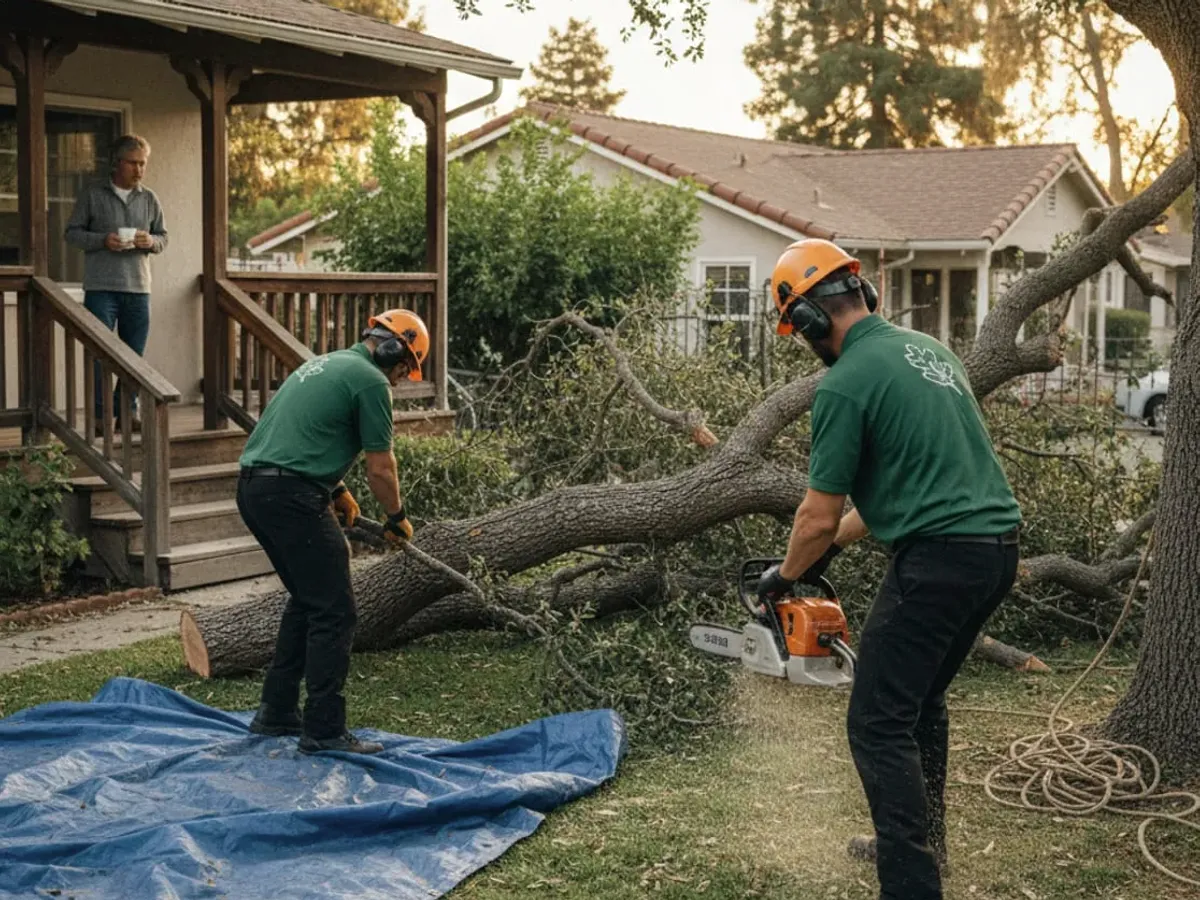
Removal shouldn’t begin with the species name or one visible symptom. It begins with the whole tree, its surroundings, and the owner’s goals.
Conditions that justify a professional assessment
A professional assessment is warranted when the tree changes suddenly. Fresh leaning, lifted soil, splitting stems, hanging limbs, or movement at the root area deserve attention. Keep people away from the affected area until someone qualified evaluates it.
Slow changes also matter. A thinning canopy, repeated branch loss, mushrooms near the trunk, or extensive bark damage may justify an inspection. These signs don’t prove that removal is necessary. Different pests, diseases, drainage problems, and root injuries can produce similar symptoms.
Species can shape the inspection without settling the decision. A Canary Island date palm with unusual crown decline needs different evaluation than a coast live oak with thinning foliage. South American palm weevil is established in San Diego County and kills Canary Island date palms. Suspected giant palm weevils should be reported to the county agricultural commissioner.
Coast live oaks can also face goldspotted oak borer pressure. Crown thinning and bark staining alone don’t confirm that pest. Identification, damage severity, tree condition, and nearby targets all matter.
Construction history belongs in the conversation. Root cutting, soil compaction, trenching, or grade changes can cause delayed decline. They can also affect stability. Tell the assessor about recent paving, utility work, irrigation changes, or excavation.
An assessment should identify the observed defects and likely consequences. It should also compare removal with reasonable alternatives. Our tree removal service connects property owners with licensed, independent local tree companies that can inspect the site and propose a defined scope.
How coastal exposure changes the inspection
Oceanside properties don’t all expose trees to the same conditions. A site near the coast may receive direct salt spray or saline irrigation drift. Salt injury can brown leaf tips and margins, sometimes more heavily on the exposed side.
Those symptoms still aren’t a diagnosis. Root-zone salinity, drought, excessive moisture, and disease can look similar. Soil drainage, irrigation coverage, and water quality help separate them. Adding more water without checking drainage can make some problems worse.
Wind exposure also changes the stakes. An open coastal lot can present different loading than a sheltered yard. Farther inland, heat, dry air, and Santa Ana conditions may increase water demand. Neither setting proves that a tree is unstable.
The inspection should consider canopy balance, branch attachments, trunk condition, and root anchorage. It should also note recent changes around the tree. A removed windbreak, new wall, altered irrigation, or nearby construction may change how the site behaves.
Species and form matter here too. Eucalyptus, Torrey pine, queen palm, and coast live oak don’t share one failure pattern. A professional should inspect the actual tree instead of relying on a species reputation.
Oceanside’s public-tree rules create another important distinction. The City maintains a street-tree program, and its City Arborist reviews removal requests case by case. Blocked views and falling litter aren’t listed as removal grounds. First establish whether the tree is private, City-maintained, or within a Landscape Maintenance District.
Our Oceanside tree service page explains the referral options available across the city. The matched company should still inspect the specific address and tree before recommending work.
What access and nearby structures mean for the plan
A removal decision includes more than the tree’s condition. The crew needs a safe, workable path from the tree to its equipment. Fences, gates, retaining walls, pools, roofs, overhead lines, and narrow side yards can change the method.
Start by identifying everything within reach of the tree or its sections. Include the house, garage, parked vehicles, neighboring property, utilities, and landscaping that must remain. Discuss which areas the provider needs kept clear.
Ground conditions matter when heavy equipment is proposed. Crane setup depends on slope, firmness, drainage, compaction, and manufacturer requirements. Known underground tanks, voids, and utilities must be communicated to the company planning the work.
Utility marking also has limits. DigAlert member markings generally cover facilities owned or maintained by participating utilities. They don’t locate every private irrigation line, sewer lateral, drain, or other private facility. Markings also don’t establish utility depth. Ask what private locating or hand exposure the proposed work requires.
Overhead electrical conflicts need separate handling. Don’t approach a tree touching or threatening a power line. SDG&E decides whether lines should be de-energized, covered, moved, or otherwise addressed for the work. Ordinary contractor licensing doesn’t establish electrical line-clearance qualifications.
The written proposal should identify the removal method and work boundaries. It should state whether the quote includes hauling, stump work, final grading, or protection of retained landscaping. Stump grinding and complete root excavation aren’t the same scope.
Access often affects pricing, but no reliable official Oceanside average was confirmed. Our guide to tree service costs in Oceanside explains the questions that make written quotes easier to compare.
When pruning may remain an option
Removal isn’t the automatic answer for every dead branch or uneven canopy. Purposeful pruning may reduce a specific concern while retaining the tree. The right choice depends on the defect, tree condition, surrounding targets, and how much healthy tissue must be removed.
Useful pruning begins with a defined objective. That could mean removing dead wood, improving clearance, or reducing weight on a particular limb. Vague instructions such as “thin everything” don’t describe which branches should change or why.
Topping is different from appropriate reduction. Indiscriminate cuts to stubs or unsuitable lateral branches can stress a tree. They may also expose tissue to sun injury and produce weakly attached sprouts. Selective reduction needs a tree-specific plan.
Mature trees generally need restrained pruning. ISA guidance treats foliage-removal percentages as qualified limits, not annual targets. Species, age, condition, size, and the purpose of each cut determine an appropriate dose.
Palms require another approach. Normal palm pruning mainly addresses dead or dying fronds and fruit or flower clusters when needed. Healthy foliage should generally remain. The terminal bud must be protected, and climbing spikes permanently wound living palm trunks.
Pruning can’t correct every problem. It doesn’t restore decayed roots, reverse severe trunk failure, or guarantee protection during wind. Cabling and bracing can supplement certain weak attachments, but those systems don’t eliminate failure risk.
Timing also depends on species and purpose. Our guide to the best time to remove a tree explains why seasonal convenience shouldn’t delay an urgent hazard assessment. Active nests and protected wildlife may also affect when planned work proceeds.
What to verify before choosing a tree crew
Ask each company to explain its recommendation in writing. A useful proposal identifies the tree, work limits, removal method, access plan, cleanup, and exclusions. It should distinguish trunk removal, stump grinding, root work, hauling, and site restoration.
Check the contractor’s current status through the CSLB license lookup. Review the classification shown for the proposed scope. A current C-49 classification may cover tree work, while some legitimate contractors retain an active legacy C-61/D-49 classification.
ISA certification is separate from a California contractor license. It belongs to an individual, not automatically to a company. If that credential matters to your decision, ask who will inspect the tree and verify that person’s current credential. An absent public directory listing alone doesn’t disprove certification because directory participation can be omitted.
Ask how the job will be staffed and verify applicable insurance records. Workers’ compensation requirements depend partly on whether the contractor has employees and the classification held. Don’t assume every company has the same status. A certificate of insurance also isn’t the policy and doesn’t change its terms.
The proposal should explain responsibility for permits or City coordination. A private company’s availability doesn’t authorize removal of an Oceanside street tree. Confirm ownership and jurisdiction before accepting the scope.
Compare the reasoning, not just the total. One proposal may preserve the tree through limited pruning. Another may recommend removal because the remaining risk is unacceptable. Ask each provider to explain the observed condition, available alternatives, and what would remain afterward.
Limb SD is a referral service. We match homeowners with licensed, independent tree professionals. The customer contracts with and pays the selected company directly.
When to call us
Call when a tree’s condition, location, or access requires a licensed Tree Service pro. We can connect you with a local company for site-specific Oceanside tree care or removal planning.
Call us at (858) 400-4587 and we’ll connect you with a licensed local tree company.