Limb SD connects property owners with licensed and insured independent tree professionals across San Diego County. Limb SD holds no trade licenses and performs no tree work. The customer hires and pays the matched professional directly.
The best time to remove a healthy tree in San Diego is usually fall through early winter, mainly because fewer birds are nesting then, not because of price. No local price data supports a winter discount. A dead, cracked or leaning tree shouldn’t wait for any season.
Is winter cheaper in San Diego?
No local price data supports it. The off-season discount idea comes from cold regions, where frozen ground and harsh weather shut work down for a while. San Diego’s climate doesn’t do that. The National Weather Service climate narrative says snow is “practically unknown” at the official downtown weather station, so there’s no snow-season lull to discount around.
Any company can still choose to run a slow-season special, so ask each pro directly. What moves a quote is covered in what shapes a tree removal price in San Diego. Timing is one variable among many, and it’s rarely the biggest.
Why nesting season matters most
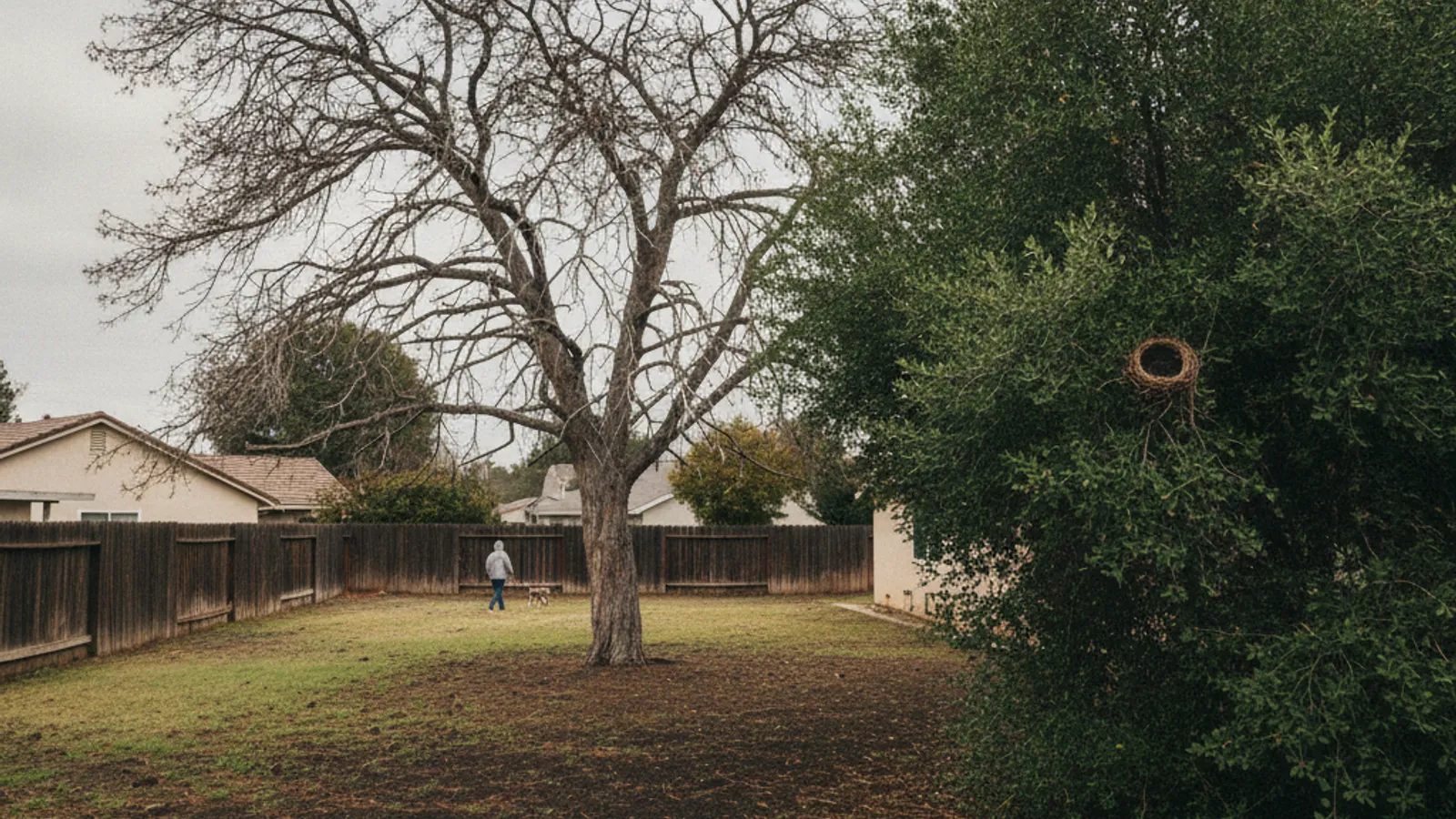
Birds are the main legal reason to schedule a healthy tree’s removal in a particular window. Three layers apply.
Federally, the Migratory Bird Treaty Act prohibits take, which the U.S. Fish and Wildlife Service lists as “including killing, capturing, selling, trading, and transport” of protected migratory birds without authorization. In California, Fish and Game Code 3503 says “It is unlawful to take, possess, or needlessly destroy the nest or eggs of any bird.” Section 3503.5 covers birds of prey and their nests and eggs.
The statutes don’t print a calendar. For dates, the U.S. Fish and Wildlife Service advises to “Schedule all vegetation removal and trimming… outside of the peak bird breeding season to the maximum extent practicable.” When work can’t avoid that season, it says to survey for active nests first, and “Generally, the surveys should be conducted no more than five days prior to the scheduled activity.”
Locally, the nonprofit San Diego Bird Alliance says “some bird species begin their breeding season as early as February, with most wrapping up by the end of August.” Its guide suggests planning tree trimming, pruning and underbrush clearing “outside the breeding season,” typically October through January. That window is the group’s guidance, not a legal deadline. The same guide says “some species may even breed year-round,” so a winter date isn’t a guarantee of no nests.
The City of San Diego sets its own window for one related job. For private property within or next to the City’s Multiple Habitat Planning Area (MHPA) and open space, brush management during “bird breeding season (Feb. 15 through Aug. 15)” requires a qualified biologist to survey first. That window covers brush management only. It isn’t a general tree removal rule. Whether it, another city rule or a county rule applies to your tree depends on the parcel, so ask the permitting agency. Never remove or disturb an active nest yourself; the Fish and Wildlife Service says not to “remove active nests without valid authorization or permit.”
For legal questions about your own tree, confirm with the agency, your insurer or an attorney.
Rain, ground and access
Rain is concentrated in a few months. The National Weather Service climate narrative states “Eighty-five percent of the rainfall occurs from November through March”. Monthly and seasonal totals vary widely.
Wet soil changes the job, even in a dry-summer county. A crew bringing a chipper, a truck or a crane across a soft side yard or a graded slope can leave ruts, and a sodden hillside is a harder place to work. Whether a particular site needs a dry spell is a call for the pro you hire. Ask during the site visit. Rain days can also push a start date back, and a pro can tell you how they handle that.
Wet soil also affects the tree. UC IPM notes that when large roots are cut or injured, the tree “becomes more likely to be blown over by wind, especially if the soil is wet.” That matters for neighbors of a tree being left standing after nearby work.
Santa Ana winds and storm demand
The same National Weather Service narrative says the hot, dry easterly winds “are predominant in the fall”. Strong offshore events can drop trees. In January 2023, the National Weather Service’s yearly summary recorded that 20 large trees were knocked down by 45 mph gusts in Balboa Park, and one of them injured a woman.
Fall is also Santa Ana season, so ask the pro you hire whether to book a planned removal before an expected wind event or well after one, and how a storm would affect the schedule. For storm situations, see emergency tree service.
Permits and HOA approval set your earliest date
Timing often depends on paperwork, not weather. Whether a permit is needed depends on the jurisdiction, and the rules differ between the City of San Diego, other cities and unincorporated county land. Our guide to getting a tree removal permit in San Diego County lays out the questions to ask.
Review times differ by agency, so ask yours how long review takes and whether the answer changes by season. An HOA board runs its own schedule, so ask for its meeting dates and approval steps before you book a crew. If a bird window matters to you, start the paperwork early enough that approval lands before February.
Species timing
Most species don’t have a removal season. Eucalyptus is the main exception. UC IPM’s guidance on eucalyptus longhorned borers says to “Remove infested trees and branches immediately, but do all other pruning during December and January when adult beetles aren’t present.” It adds that “Freshly cut wood, dying limbs, and trees suffering from stress, especially drought stress, attract both of these beetles.” That passage is about pruning, but it shows why an infested or declining eucalyptus shouldn’t wait for a convenient month. See the eucalyptus tree removal service page for how that job is usually scoped.
For pruning dates by species, use the San Diego pruning calendar. It covers pruning, not removal.
Dead or hazardous trees shouldn’t wait
If a tree is dead, split, leaning or has failed roots, timing for savings or birds doesn’t apply the same way. Nesting-season guidance is about avoiding harm to active nests, and the agency guidance above describes surveys and buffers for work that can’t wait. Ask the pro and the permitting agency how it applies to your tree. Our guide to signs a tree is going to fall lists what to look for. If a tree is already down or hanging, see emergency tree service.
Frequently asked questions
Is it cheaper to remove a tree in winter in San Diego?
No local price data supports a winter discount, and San Diego has no snow-season slowdown. Ask each pro how they price, and compare written quotes.
What is the best month to cut down a tree in San Diego?
For a healthy tree, aim for fall or early winter. The San Diego Bird Alliance, a nonprofit, suggests October through January for tree trimming, pruning and underbrush clearing, outside most breeding. That’s the group’s guidance, not law. Dead or hazardous trees should come down as soon as a pro can safely do it.
Can you remove a tree during bird nesting season in California?
It depends on whether active nests are present. Fish and Game Code 3503 makes it unlawful to needlessly destroy the nest or eggs of any bird. When work can’t wait, agencies describe a survey by a qualified person and buffers around nests. Confirm the rule for your parcel with the permitting agency.
Does rain stop tree removal in San Diego?
Heavy rain can delay a job and make soft ground harder to work, and most San Diego rain falls from November through March. The pro you hire decides whether your site is workable on a given day.
Do I need a permit before I pick a date?
Check first. The answer depends on your city or county jurisdiction, and an HOA may need to approve separately. Start there so paperwork doesn’t push the date.
Summary
Timing a San Diego removal comes down to nesting birds, ground conditions, wind season and paperwork, not a proven winter discount. Pick the window with the pro you hire, and don’t delay a tree that’s failing.
When to call a tree professional
Call when a tree has to come down and you want the date to work around nesting, rain and permits, or when a tree looks unsafe. Call (858) 400-4587 and Limb SD will connect you with a licensed local tree professional. Our tree removal page explains how that works.