A weakening crown or unusual pink growth can signal a palm health problem. It doesn’t confirm pink rot, and cutting into the palm can make diagnosis harder. Start with safe observations and a professional inspection.
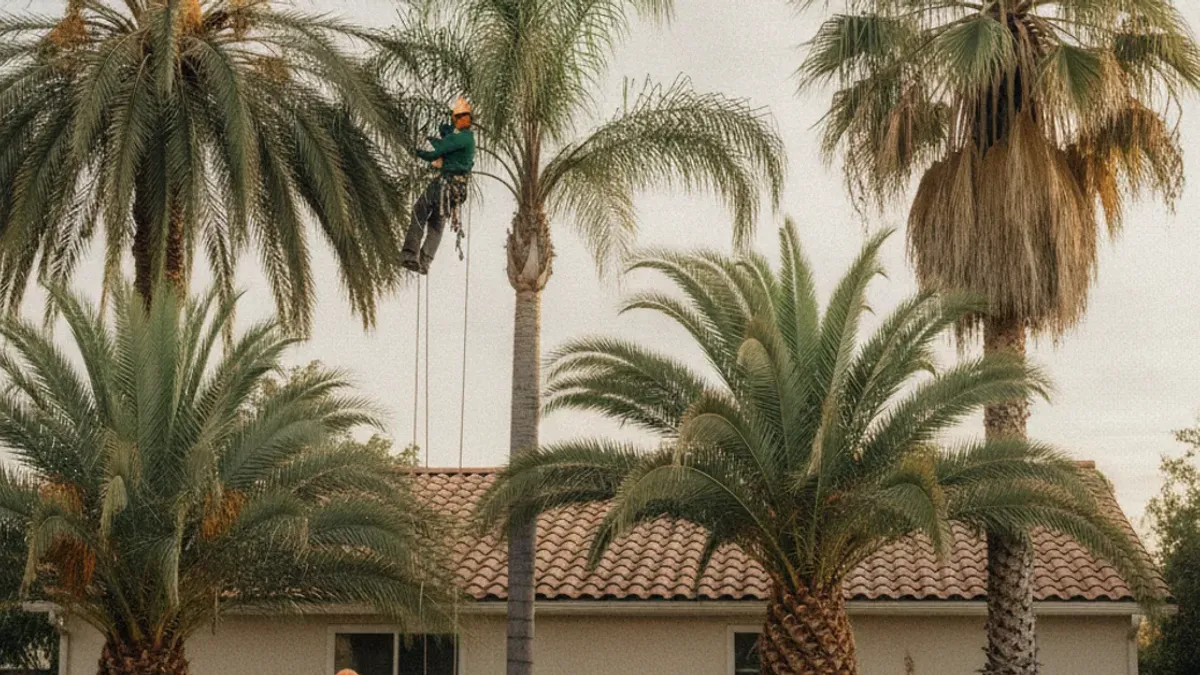
What changes may point to a palm health problem
Pink rot is associated with the fungus Nalanthamala vermoesenii. UC Integrated Pest Management describes it as an opportunistic disease of stressed or wounded palms. It can affect different palm tissues, including the growing tip.
Possible warning signs include declining fronds, damaged crown tissue, and pink spore growth. Those changes aren’t enough to confirm the disease. A palm can have one visible symptom while the main problem sits elsewhere.
Watch for changes rather than judging one brown frond. Useful observations include:
- New decline near the crown
- A crown that looks uneven or thinner
- Fronds collapsing before normal removal
- Pink or salmon-colored material on affected tissue
- Soft, damaged, or discolored areas visible from the ground
- A recent change following pruning, irrigation trouble, or physical injury
Searchers sometimes describe the problem as “palm tree fungus on trunk.” That phrase covers several unrelated conditions. The location, texture, moisture, and pattern all matter. A mushroom near the base is different from pink growth near wounded crown tissue.
Palm species also matters. Queen palms, Mexican fan palms, king palms, and Canary Island date palms don’t share identical structures or disease risks. Our guide to San Diego palm types can help establish a starting identification.
Don’t remove tissue just to get a closer look. Avoid climbing, probing the crown, or peeling material from the trunk. Photograph only what’s visible from a safe location.
Why several conditions can look alike
Palm decline rarely identifies its own cause. Yellowing, one-sided frond death, crown thinning, and premature leaf loss can occur for different reasons. Water problems, physical wounds, nutrient disorders, petiole or rachis blights, Fusarium wilt, and insect damage can overlap visually.
UC IPM notes that one-sided leaflet death has several possible causes. Fusarium wilt, pink rot, and petiole or rachis blights shouldn’t be separated by one photograph alone. The number of affected fronds, tissue involved, palm species, and progression pattern all shape the diagnosis.
Pink rot can produce pink spores, but that clue still needs context. It doesn’t prove that every nearby crack, cavity, or soft area has the same cause. UC IPM also says the connection between pink rot and palm trunk decay remains unconfirmed. That matters when deciding whether a palm is diseased, structurally compromised, or both.
South American palm weevil creates another local concern. The pest is established in San Diego County and kills Canary Island date palms. Severe damage may lead to crown failure. Suspected giant palm weevils should be reported to the county agricultural commissioner. Don’t assume crown decline is pink rot when a pest or another disease remains possible.
Our San Diego palm disease guide compares several look-alike conditions. It can help you organize observations before an inspection. It can’t replace diagnosis at the tree.
A diagnosing professional may recommend closer examination or laboratory testing. Ask what evidence supports the diagnosis and which alternatives were considered. A responsible answer may remain provisional until enough evidence is available.
How a palm inspection stays safe
A safe inspection begins on the ground. Tall palms can drop heavy fronds, fruit stalks, or crown material. A green crown also doesn’t prove the trunk or growing point is sound.
Keep people, pets, and parked vehicles away from falling-material exposure. Don’t stand beneath loose fronds to photograph them. Don’t shake the trunk, strike it, or climb for a closer view. Homeowners also shouldn’t cut into the crown or trunk to collect samples.
Start by viewing the entire palm from several safe positions. Note the crown shape, lean, hanging material, and nearby targets. Then use a phone camera or binoculars for details visible above ground. Photos taken over several days can show whether symptoms are spreading.
Stop the inspection if the palm moves unexpectedly, sheds material, or has a visibly damaged crown. A tree professional should decide how to approach inaccessible tissue. If electrical lines are involved, keep away and contact the utility before ordinary tree work.
Inspection and pruning are separate decisions. Removing fronds before diagnosis can erase useful evidence. Contaminated pruning tools and debris can also spread Fusarium wilt among Canary Island date palms. Disease-specific sanitation involves cleaning debris and substantial disinfection before each palm, not a quick wipe between cuts.
For planned maintenance, review our San Diego palm trimming season guide. There isn’t one inherently best pruning season for every palm. Dead fronds, living foliage, fruit, disease concerns, and site risk all affect timing.
When hiring, verify the actual company through the CSLB license lookup. ISA certification belongs to an individual, not a company. You can also review the ISA arborist resources and ask the person to share current credential information.
What information helps the diagnosing arborist
A clear history can be as valuable as a close photograph. Before the visit, write down when you first noticed the change. Record whether symptoms appeared suddenly or progressed across several fronds.
Include the palm’s known species, if available. If you aren’t certain, photograph the full crown, trunk, leaf form, fruit, and any crownshaft. Don’t collect those materials from above ground.
The professional will also benefit from these details:
- Recent pruning dates and the company that performed the work
- Whether climbing spikes touched the living palm
- Any trunk skinning or removal of attached leaf bases
- Irrigation changes, leaks, or prolonged wet soil
- Construction, soil compaction, or impacts near the root area
- Previous disease or pest findings
- Nearby palms showing similar changes
- Fallen fronds or tissue available without entering a hazard area
- Products previously applied to the palm or surrounding soil
Location within San Diego County also helps frame the site history. Note whether the property is coastal, inland, exposed to strong winds, or next to irrigated landscaping. Don’t convert those details into a diagnosis. They’re context for evaluating stress and moisture.
Ask what the inspection includes before hiring. A visual assessment, written report, laboratory sample, risk evaluation, and treatment proposal aren’t automatically the same service. Confirm what you’ll receive and who performs each part.
If treatment is proposed, request the diagnosis, product, application method, precautions, and monitoring plan in writing. California pesticide work can require credentials beyond a tree contractor license. Ask for the pest-control business and applicator information that applies to the proposed work. Don’t assume a C-49 or legacy D-49 tree classification authorizes pesticide applications.
Limb SD can connect you with independent providers for palm tree service. The provider should inspect the actual palm before recommending work.
When trimming or removal may be considered
A pink rot palm doesn’t have one automatic outcome. The decision depends on the confirmed or suspected condition, affected tissue, palm stability, nearby targets, and whether useful living tissue can remain.
Trimming may be considered when dead, dying, or broken material creates a site concern. Healthy foliage should generally remain unless a specific clearance or risk objective requires otherwise. Overpruning reduces photosynthetic area and can create additional wounds. The palm’s terminal bud must be protected.
Disease concerns change how that work is planned. Tools and debris need condition-specific handling. A crew shouldn’t move from a suspect palm to another palm without an appropriate sanitation process. Ask the company to explain its procedure before cutting begins.
Removal may enter the discussion when the growing point has severe damage, the palm has unacceptable structural risk, or the diagnosis offers no workable preservation path. That judgment should follow an inspection. Pink growth alone doesn’t establish that removal is necessary.
The site also shapes the plan. A palm over a tile roof in Chula Vista presents different access concerns than one beside an open yard in Escondido. Nearby utilities, narrow gates, slopes, buildings, and falling-material zones affect the removal method. Those factors don’t prove which equipment will be required.
If South American palm weevil is suspected, material handling needs current local guidance. UC IPM says suspected giant palm weevils should be reported to the county agricultural commissioner. Infested material shouldn’t be treated as ordinary clean landscape debris.
Get the proposed scope in writing. It should identify the palm, work objective, retained tissue, debris handling, and any treatment or testing. Confirm whether stump work, final cleanup, and follow-up monitoring are included. Don’t rely on a vague instruction to “clean up the palm.”
When to call us
Visible crown decline, falling fronds, pink growth, or suspected trunk damage needs a licensed Tree Service pro when work involves height, powered equipment, or structural risk. Call us at (858) 400-4587 and we’ll connect you with a licensed local tree company.