Limb SD connects property owners with licensed and insured independent tree professionals across San Diego County. You hire and pay the matched pro directly. Limb SD performs no tree work itself.
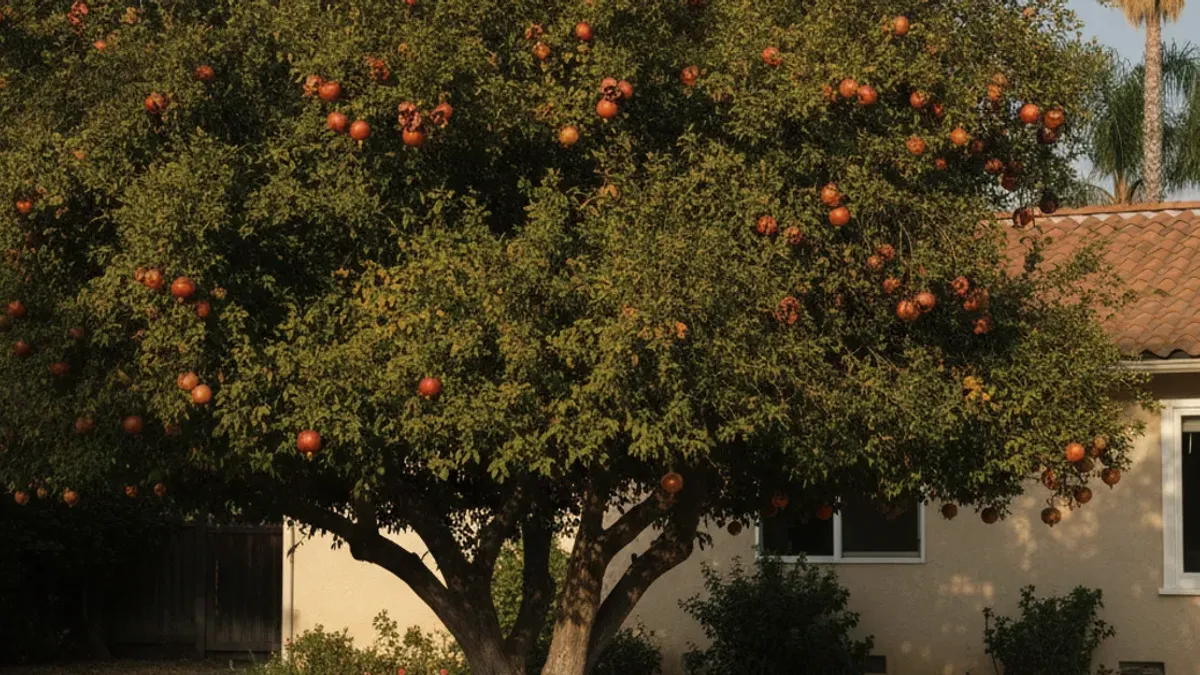
Pomegranate trees need structural cuts during winter months in San Diego. Summer trimming stays minimal because branch tips often hold developing fruit. You can shape this plant as a multi-stemmed shrub or train it upward like a small tree. The right form depends on your yard space and goals. UC Marin Master Gardeners explains the pruning choices.
Why coastal and inland yards demand different care
A pomegranate growing in El Cajon faces different conditions than one in Encinitas. Hot, dry inland valleys generally produce better fruit quality, according to UC ANR’s production guide. Mild summers near the coast might limit commercial yields, but the plant still works well as an ornamental feature.
Soil matters just as much as climate. Deep loam supports healthy root development best. These plants tolerate various soil types, yet poor drainage or high alkalinity reduces growth. Check your specific planting spot rather than following a single countywide rule.
The cultivar you planted changes expectations too. UC IPM’s pomegranate guide separates fruiting varieties from ornamental ones that mostly yield inedible pods. Verify your exact cultivar before assuming flowers will turn into harvestable crops.
Shaping the canopy through seasonal pruning
Decide on a structure first. Some homeowners prefer a wide shrub base around 18 to 24 inches across. Others want a formal tree shape. UC Marin Master Gardeners notes that keeping a shrub form simplifies routine cuts. You do not need exactly three to five main trunks for every plant.
Fruit develops on older spurs and fresh wood alike. Those productive spurs typically last three to four years. Leave strong inner replacement canes so younger wood takes over as older branches decline.
Follow these steps during winter dormancy:
- Cut away dead, diseased, or broken stems.
- Remove any branches rubbing against each other.
- Clear out canes pushing the base wider than you can comfortably reach.
- Pull out root suckers emerging from the ground.
- Trim outer branches sagging low enough to touch dirt.
- Thin weak interior growth while saving replacements for aging spurs.
Avoid heavy summer cuts unless growth becomes unmanageable. Snipping every outer tip removes potential fruit without improving structure. Our San Diego tree pruning calendar covers timing for other species on your property. Every plant still requires its own assessment.
If you need structural cuts done safely, our tree pruning service page explains how the pros we connect you with handle the work.
Understanding why ripe fruit cracks open
Splitting happens naturally as pomegranates reach maturity. UC Master Gardeners of Placer County points out that rain entering an open crack spoils the seeds inside quickly.
Look at the whole picture before changing your watering habits. Check fruit ripeness, recent storms, irrigation schedules, and site drainage together. One cracked pod does not reveal the exact cause. Adjusting multiple variables at once makes troubleshooting harder.
Spotting insects and fungal problems early
Several insects target pomegranates locally. UC IPM lists leaffooted bugs, mealybugs, scale insects, and whiteflies as potential threats. Fungal issues like Armillaria and Botrytis also appear occasionally. Finding one symptom does not guarantee a specific pest lives in your yard.
Examine fruit surfaces, leaf undersides, stems, and the trunk base closely. Watch whether damage spreads over time and if live insects are actually present. Never pick a treatment based on a single visual clue. Reading about common San Diego tree diseases helps organize observations before requesting a professional visit.
Judging the right moment to harvest
No fixed calendar date applies across all San Diego neighborhoods. Ripeness shifts based on your specific cultivar, bloom timing, and seasonal weather patterns. UC Master Gardeners suggest looking for full cultivar color, angular shoulders, and a metallic sound when tapped.
These fruits never sweeten after picking. UC Davis describes the fruit as non-climacteric, meaning counter time won’t improve flavor. Harvest only when fully ripe. Use clippers to cut the stem instead of pulling pods off by hand.
Choosing a planting location that drains well
Water movement through soil determines long-term success. While adaptable to many textures, standing water harms roots and limits yields. Alkaline soils create additional stress. Test drainage at the proposed spot before digging.
Leave adequate clearance for whichever form you plan to maintain. Ask your nursery for mature dimensions tied to your exact cultivar. Generic spacing rules fail because training methods and variety sizes vary widely. If you’re planning new additions to your landscape, our guide to drought tolerant trees in San Diego offers compatible options.
Deciding when fertilizer is actually necessary
Skip automatic feeding schedules. UC IPM’s fertilizer guidance states many established woody plants thrive without routine applications. Fruiting species sometimes need exceptions, but apply nutrients only when site conditions or plant symptoms justify it.
Too much nitrogen triggers excessive vegetative growth. That means more pruning, higher water demands, and increased pest vulnerability. Evaluate irrigation, drainage, salt buildup, and disease before assuming a nutrient deficiency caused poor performance.
Frequently asked questions
What season works best for structural pruning?
Winter dormancy provides the safest window for major cuts. Save summer trimming strictly for runaway growth that blocks access or light.
Must every plant follow a vase-shaped form?
Not at all. Pomegranates grow naturally as dense shrubs. Training them into trees remains optional based on available space and personal preference.
What triggers sudden cracking in mature fruit?
Natural ripening causes splits, especially followed by unexpected rainfall. Review your irrigation timing and drainage before altering your entire care approach.
How often should I water my plant?
No single volume fits every yard. Soil type, container size, weather, and growth stage dictate moisture needs. Feel the soil directly rather than following a rigid weekly schedule.
Which insects commonly attack this species?
Watch for leaffooted bugs, whiteflies, scale, and mealybugs. Confirm insect presence and actual damage before selecting any control method.
When to call a tree professional
Hire help when structural pruning requires climbing, powered saws, or working near overhead lines. A trained eye also matters if widespread dieback or unidentified pests threaten the plant. Call (858) 400-4587 and Limb SD will connect you with a licensed local tree professional.