Limb SD connects property owners with licensed and insured independent tree professionals. You hire the matched contractor directly and pay them for the work. Limb SD does not perform any tree care, hold trade licenses, or own equipment. We simply match you with local experts who serve every part of San Diego County. Call (858) 400-4587 when you need help.
Why watering trees in San Diego requires local knowledge
A schedule that works in La Jolla will likely fail in Escondido. The marine layer along the coast slows evaporation significantly. Inland valleys face hotter afternoons and drier winds. Copying a neighbor’s timer settings ignores these realities. Your specific street determines how fast moisture leaves the ground. Read our guide on coastal versus inland tree trimming to understand how geography shapes tree care here.
Soil composition changes just as much as the weather. Coastal properties often deal with salt spray damaging foliage. Saline irrigation water harms roots through entirely different pathways. Inland soils accumulate salts from fertilizers and natural mineral deposits. Request a water quality report from your local supplier before making changes. Test your soil or irrigation source before applying any amendments. Never attempt to leach salt from a yard that lacks proper drainage. Sodic soil tests must come first if you plan to apply gypsum. Always check current outdoor restrictions set by your local water district.
How new plantings drink differently than established ones
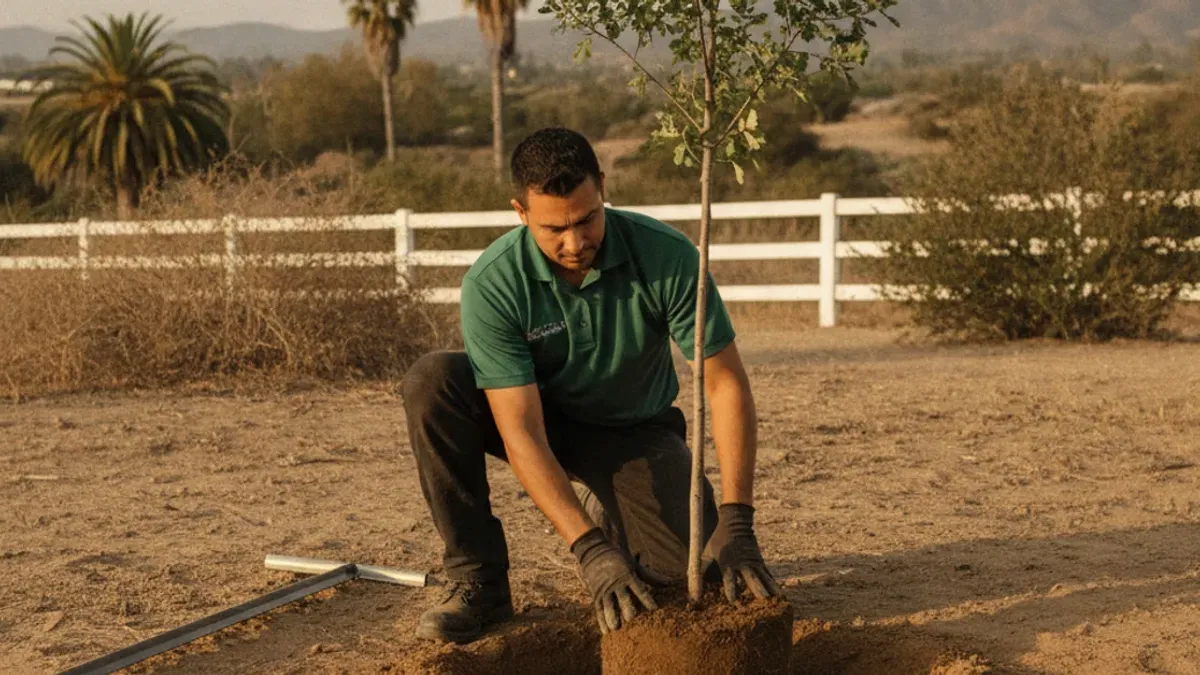
Nursery stock relies entirely on its original root ball for moisture. That compacted sphere dries out even when surrounding dirt feels damp. You must irrigate both the ball and the adjacent native soil. Watch how water infiltrates the ground around the planting hole. Shallow sprinkling forces roots to stay near the surface where they bake. Deep soaking encourages roots to anchor properly over time. Keep the trunk base completely dry during every single irrigation cycle. Soaking the root collar invites rot and structural failure.
Mature specimens draw moisture from a much wider underground area. Their roots extend well past the visible drip line. Removing turf grass eliminates a hidden water source for those older roots. Trees that shared lawn sprinklers suddenly face severe deficits. No universal timeline dictates when a newly planted tree becomes established. Each species and location follows its own schedule. Choosing the right species matters early on. Review our list of the best drought tolerant trees in San Diego before planting anything new.
Checking your irrigation hardware before changing timers
Increasing run times without inspecting your system wastes water. Clogged emitters deliver nothing regardless of how long they run. Misaligned sprinkler heads often soak hardscape instead of soil. Verify that spray patterns reach beyond the lowest branches. Water must penetrate through mulch layers into the actual dirt. Surface dampness tricks many homeowners into thinking roots are hydrated. Dry pockets frequently hide just inches below wet mulch.
Feel the accessible topsoil with your hands before guessing. You do not need probes or trenches to check basic moisture. Look for wilted foliage, soggy earth, standing puddles, or dusty surfaces. These visual cues tell you more than a clock dial. Windy and sunny days increase demand across all zones. Adjust schedules based on what the ground actually shows you. If root zone moisture remains unclear after your inspection, hire qualified experts. A professional assessment saves struggling plants.
Reading leaf symptoms correctly
Drought stress and waterlogged soil produce identical leaf damage. Brown edges or yellowing foliage do not automatically mean a tree needs more water. Saturated ground starves roots of oxygen and halts nutrient uptake. Adding water to poorly draining soil accelerates decline rapidly. Sour smelling earth combined with algae stains points to drainage failures. Limp leaves sitting above soggy ground confirm this problem.
Crispy margins surrounded by dry dust usually indicate emitter problems. Salt exposure, wind burn, disease, and nearby construction mimic thirst perfectly. Correct your wetting patterns and fix drainage issues before adding volume. Never assume foliar decline equals a simple deficit. Understanding local diseases helps separate water stress from infection. Our overview of common San Diego tree diseases explains what else causes leaf drop.
Species demands vary wildly across the county
Native status does not eliminate the need for dry season monitoring. Some indigenous species suffer collar damage from summer irrigation. California sycamores require high water volumes to thrive. Desert willows survive beautifully on minimal supplemental moisture. Knowing your exact species prevents fatal mistakes at the valve. Even well adapted natives need observation during extended heat waves.
Proper hydration supports overall vigor but cures no pest infestations. Drought stressed trees attract boring insects much faster. Healthy specimens withstand limited insect attacks without permanent damage. Very few aggressive borer species cause mortality entirely on their own. Goldspotted oak borer requires specific management strategies beyond irrigation. Extra water will not treat an active borer infestation. Pine bark beetles also target weakened hosts. Learn more about pine bark beetle activity in San Diego to protect vulnerable conifers.
Never thin live canopies to reduce water demand during droughts. Living foliage maintains essential energy reserves for survival. Dead branches consume zero water and can be removed safely. Pruning green wood stresses the tree further. Follow our seasonal guide on when to prune trees in San Diego to avoid harming active growth.
Safety around utilities and emergencies
Call 911 immediately for injuries or life threatening hazards. Stay far away from downed power lines and never approach them. Utility companies decide whether lines need de energizing or moving. Contact SDG&E at 1-800-411-7343 for electrical emergencies. Read the SDG&E downed line safety guidelines before approaching any storm damage. Call the utility provider first if a standing tree touches overhead wires. Remain on the ground and never climb to inspect canopy damage. Avoid trenching near buried utilities or major root structures.
Frequently asked questions about local irrigation
When is the best time to run irrigation systems?
Optimal timing depends on your specific hardware, weather conditions, and runoff risks. Early morning cycles generally reduce evaporation losses. Match your schedule to local temperature patterns rather than generic advice.
How do I know my trees received enough water?
The only true metric is moisture reaching the root zone without wetting the collar. Surface puddles mean nothing if the deep soil stays dry. Dig carefully near the drip line to verify penetration depth.
How long should drip emitters run?
Duration varies by flow rate, soil texture, target depth, and drainage speed. Verify actual zone penetration instead of relying on arbitrary clock times. Sandy soils drain fast while clay holds moisture longer.
Can someone diagnose my tree over the phone?
No referral service can determine root causes without visiting the property. Soil conditions, pests, and structural issues require physical inspection. An on site evaluation provides answers that phone calls cannot. If you suspect illness, request a tree health diagnosis from a matched professional.
Homeowners in northern parts of the county face unique challenges. Properties in San Marcos and Escondido experience intense afternoon heat. Coastal residents near La Jolla deal with persistent fog and salt air. These differences dictate entirely separate approaches to soil moisture. Refer to UC research on water management practices for deeper scientific context. The university also publishes detailed guides on water deficit and excess symptoms to help identify problems accurately. For salt related concerns, review their resources on salinity and salt toxicity alongside their list of salt damage conditions. Bark beetle threats increase when trees lack adequate moisture, so study the UC overview of bark beetle behavior to recognize early warning signs.
Understanding your specific neighborhood matters more than general rules. What keeps a pepper tree alive in Chula Vista might drown one in Poway. Soil grades shift block by block across the region. Microclimates create invisible boundaries where plant needs change abruptly. Pay attention to how your yard behaves after rainstorms. Puddles that linger indicate poor percolation rates. Fast drying patches reveal sandy substrates needing frequent short cycles. Your observations beat any generic chart found online.
Mulch application affects how efficiently roots absorb available moisture. Thick layers shed light rain away from the trunk base. Thin applications allow rapid evaporation during Santa Ana winds. Spread organic material evenly beneath the canopy without touching bark. Leave a clear gap around the root collar to prevent fungal growth. This simple practice stabilizes soil temperatures year round. It also suppresses competing weeds that steal limited resources. Replenish decomposed material annually to maintain consistent coverage depth.
Container grown stock transitions poorly when planted incorrectly. Circling roots restrict internal water movement permanently. Teasing out bound roots before backfilling encourages outward exploration. Untouched root balls remain isolated hydroponic units within foreign soil. They reject surrounding earth and eventually strangle themselves. Proper planting technique ensures irrigation actually reaches living tissue. Our guide to planting trees in San Diego soil covers these preparation steps thoroughly. Skipping them guarantees future decline regardless of how much water you apply later.
Seasonal shifts demand constant schedule adjustments. Winter rains provide free deep soaking for most species. Spring growth flushes increase transpiration rates dramatically. Summer heat pushes shallow rooted plants toward critical stress thresholds. Fall cooling allows recovery before dormant periods arrive. Static timers ignore these biological rhythms completely. Manual overrides keep pace with changing environmental demands. Smart controllers help but still require baseline programming accuracy. Garbage input produces garbage output even with expensive technology installed.
Professional guidance protects valuable landscape investments. Certified arborists read subtle canopy signals untrained eyes miss. They measure soil compaction and evaluate drainage infrastructure objectively. Guesswork leads to expensive replacements and wasted resources. An arborist consultation provides clarity when symptoms confuse you. Experts identify whether pests, pathogens, or plumbing caused the damage. Treatment plans target actual problems instead of masking visible symptoms. Accurate diagnosis prevents unnecessary chemical applications or excessive irrigation cycles.
Large mature specimens present unique logistical challenges. Delivering sufficient moisture across expansive root zones takes planning. Standard residential sprinkler heads rarely cover wide canopy spreads adequately. Dedicated drip grids or bubbler stations serve older trees better. Retrofitting existing lawns requires careful trenching to avoid severing primary roots. Heavy equipment damages shallow feeders instantly. Hand digging preserves structural integrity during system upgrades. Professionals know exactly where major anchors grow beneath the surface.
New construction sites devastate existing vegetation routinely. Trenching for utilities severs critical absorption networks without warning. Grade changes bury root collars under suffocating fill dirt. Compacted staging areas crush pore spaces needed for oxygen exchange. Construction damage manifests slowly over several growing seasons. Homeowners blame recent weather when contractors actually caused the decline years prior. Protecting established trees during remodeling requires proactive barriers and planning. Once heavy machinery passes through, recovery options shrink considerably.
Water quality impacts long term viability just as much as quantity. Recycled municipal sources carry elevated salt concentrations naturally. Accumulated minerals alter soil chemistry progressively over multiple seasons. Sensitive species show tip burn before tolerant neighbors react visibly. Flushing accumulated salts requires adequate drainage infrastructure first. Without proper percolation, leaching attempts simply raise the water table destructively. Testing reveals exactly what dissolved solids flow from your hose bibs. Knowledge prevents accidental poisoning through well intentioned irrigation habits.
When to call a tree professional
Contact an expert when canopy decline continues despite fixing emitters and adjusting schedules. Seek immediate help if persistently wet soil threatens structural stability near foundations. Never attempt climbing or trenching near compromised limbs yourself. Call (858) 400-4587 and Limb SD will connect you with a licensed local tree professional.