Limb SD is a referral service. We connect property owners with licensed and insured independent local tree professionals. You hire and pay the matched professional directly. Confirm the pro’s license through the California Contractors State License Board before work starts. We don’t perform tree work ourselves.
Defensible space in San Diego isn’t one countywide rule
Defensible space rules in San Diego County depend on your address. The fire authority, your hazard zone, and any local overlays all shape what applies. Treating the whole county as one checklist misses parts that matter.
This post walks through how to find the right authority. It also covers what state zones describe. It also covers how those rules affect tree work on your lot.
Which agency sets the rules for an address
Start with the agency that holds jurisdiction over your parcel. Your address may sit in a State Responsibility Area. It may sit in a local hazard zone. It may sit in a city with its own fire code. Each path can carry different distances, different vegetation lists, and different inspection steps.
Ask the agency for its current written standard. A diagram from another city won’t help if your parcel sits in a different zone.
Before any tree or brush work begins, confirm:
- which agency has jurisdiction
- which structure anchors the distance measurement
- where your property line cuts off the work area
- whether local rules add to the state baseline
- whether the work needs a permit or inspection
A tree professional can scope the work. They don’t decide which law governs your parcel.
What Zone 1 and Zone 2 describe
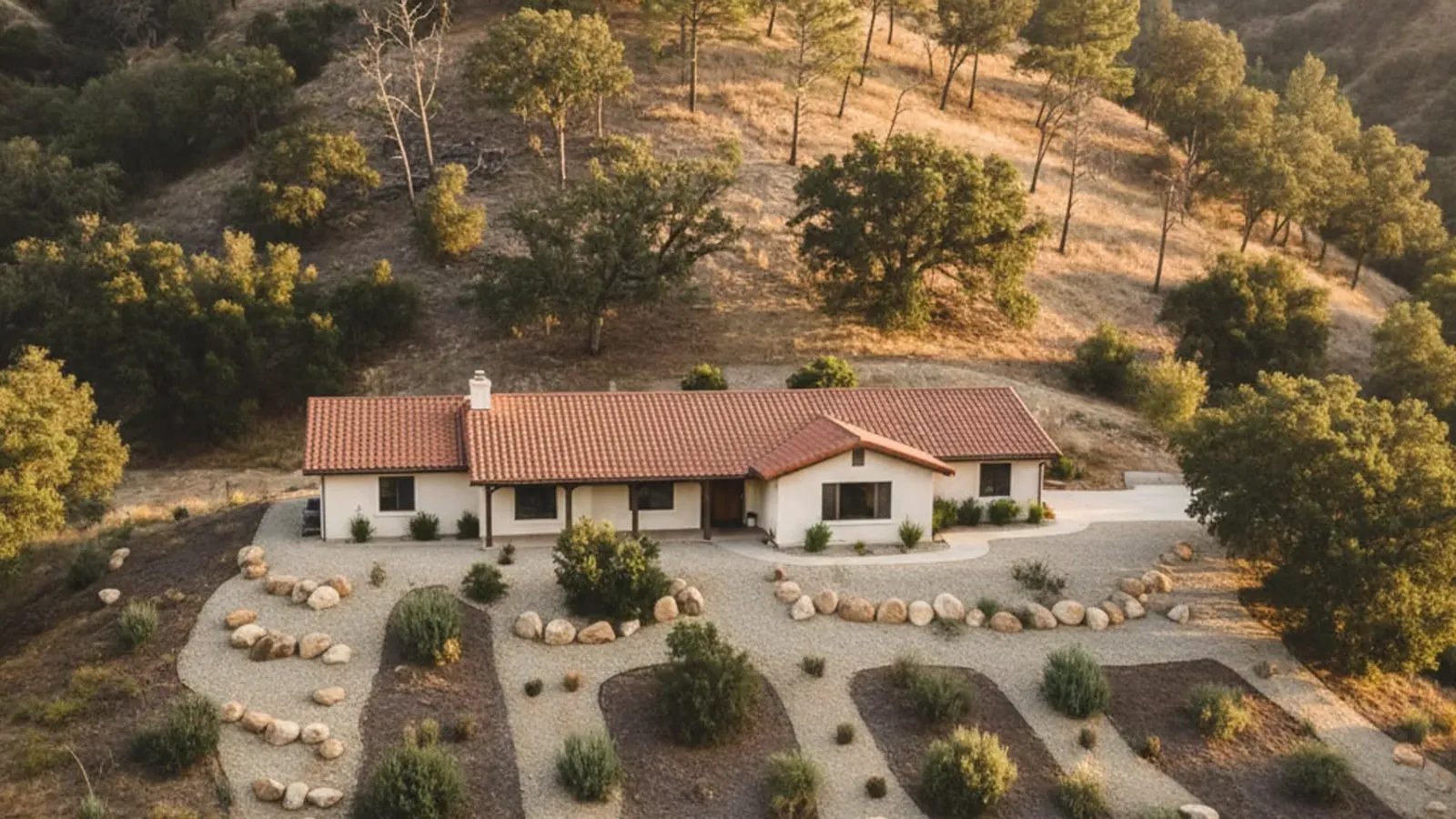
The California Board of Forestry and Fire Protection names Zone 1 as 5 to 30 feet from a structure. The same page names Zone 2 as 30 to 100 feet from a structure. The zone ends at the property line when the lot is smaller.
These distances describe where the work gets evaluated. They don’t mean every tree inside a band must come out.
Inside the work area, separate:
- dead material from living vegetation
- ground brush from mature tree work
- vegetation you keep from vegetation slated for removal
- pruning from whole tree removal
- your lot from land beyond your boundary
That split matters on small lots and canyon edges. It matters on sloped parcels. It also matters when 100 feet runs past the property line.
Is Zone 0 already a universal rule
As of September 5, 2026, the Board of Forestry page describes the first five feet as the ember-resistant zone. The page links to August 2026 rulemaking materials. Those materials do not yet create a universal rule enforced on every California parcel.
Ask the responsible fire authority what your address requires today. Your city, your fire district, or another body may add its own rule for your lot.
How trees fit into defensible space work
A zone measurement doesn’t diagnose a tree. The right task may be brush, dead material, selective pruning, or removal. Tree condition, canopy position, and slope all feed that call. The vegetation you plan to keep also matters.
Resist turning spacing guidance into automatic topping. The same goes for hard canopy stripping. Skip blanket removal of every tree near the house. The ISA’s mature tree pruning guide says every cut should serve a purpose. It also notes mature trees usually need less foliage removed, not more.
A good work scope names each affected tree and answers:
- what condition or rule drives the work
- whether ground vegetation is the issue, or tree work
- how much live canopy will stay
- what clearance your authority requires at this address
- whether the tree sits on your lot or in another jurisdiction
For pruning work, see tree pruning for what a typical scope covers. Whole tree removals follow a different process through tree removal. Larger lots with full brush and tree needs often fit land clearing. If a protected tree is in the scope, check tree removal permits in San Diego first.
Work near energized power lines belongs with the utility or authorized line clearance crews. Don’t treat line clearance as homeowner pruning. The matched pro knows the local utility’s clearance rules for trees close to power infrastructure.
Does finished work guarantee a clean inspection
No. A completed scope doesn’t guarantee the fire authority signs off. It also doesn’t guarantee your insurer will accept the work or renew your policy.
If you got an inspection notice, hand the contractor the exact items on that notice. Ask the issuing authority how corrections get reviewed. If your insurer is the concern, ask what records they accept. Don’t pay for paperwork they may not honor.
Save the contract and any records the authority or insurer specifically asked for. Photos, an invoice, or a contractor credential don’t replace their review process.
What shapes the cost of the work
Tree size, species, access, hauling, and crane needs all change the quote. Slope, brush density, and how much vegetation stays also move the price. Permits, when they apply, add a separate line.
Ask each contractor to price the same written parcel scope. The matched professional quotes before any work starts. You see the actual number for your lot.
For larger mixed-use or grove-edge parcels, the plan looks different from a tight residential lot. See defensible space planning in North County for orchard and residential edge distinctions. Poway and Rancho Bernardo lots get a tailored walkthrough at defensible space planning in Poway and Rancho Bernardo.
When to call a tree professional
Bring in a tree professional for mature pruning, whole tree removal, or work that touches established roots. Cutting above ground and unstable material also need a pro. Ground cleanup and large tree work carry different risks.
Call (858) 400-4587 and Limb SD will connect you with a licensed local tree professional.