A mature tree needs pruning, but its legal status isn’t clear. Before anyone makes a cut, confirm whether Encinitas has designated it as a heritage tree and whether the proposed work needs City approval.
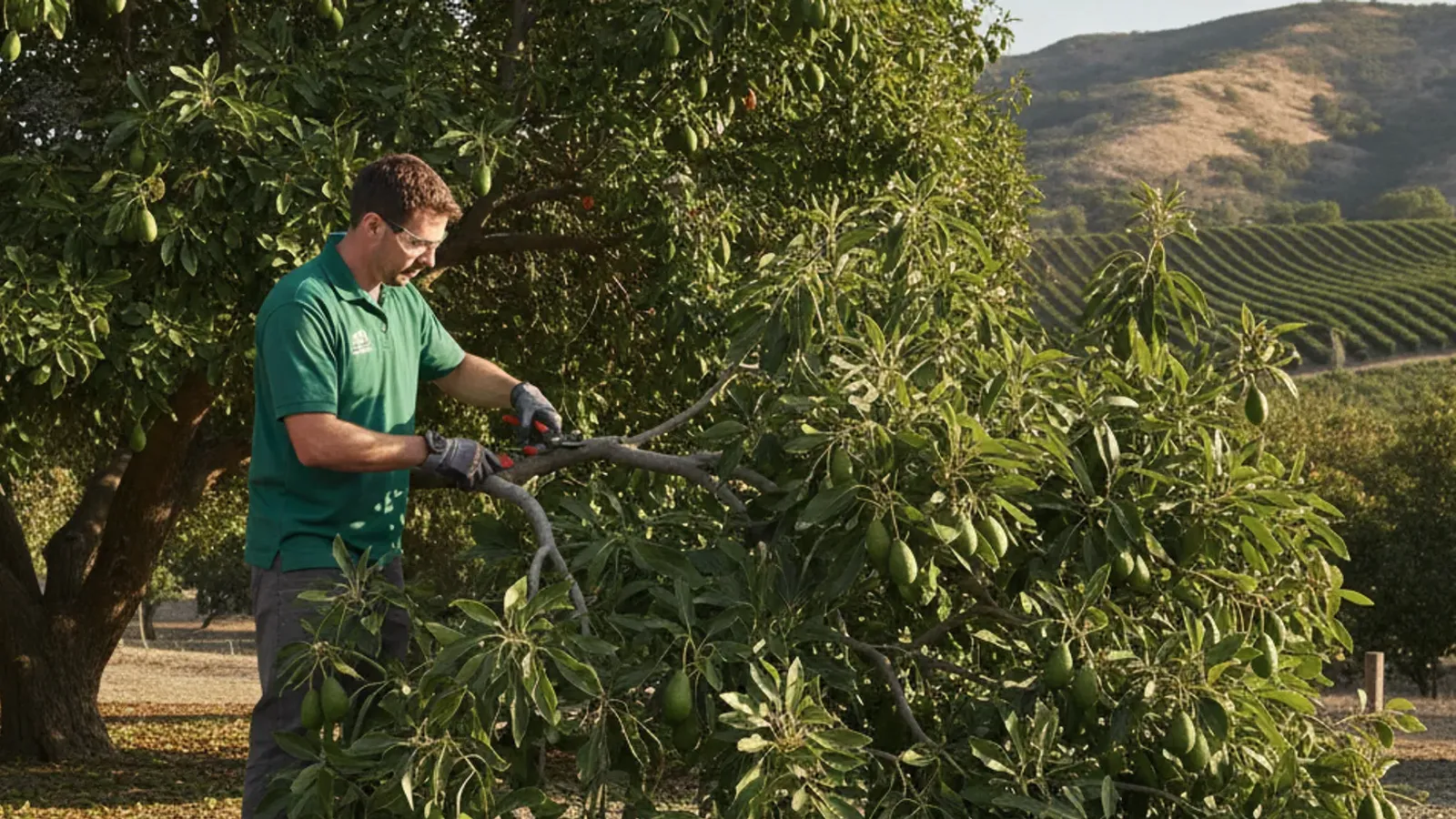
How to confirm whether the tree has a special designation
Don’t identify an Encinitas heritage tree by appearance alone. Species, trunk size, age, and location aren’t enough to prove designation. A coast live oak, eucalyptus, Torrey pine, or queen palm may be prominent without being a designated heritage tree. Heritage status can also apply to a tree on private land.
Start with the property’s existing records. Look for landscape plans, development approvals, recorded conditions, association documents, and earlier City correspondence. These records may use a tree number or show a protection area around the canopy. Match every reference to the actual tree before relying on it.
If the records don’t settle the question, contact the City of Encinitas. Give the City the property address, parcel information, tree location, photographs, and proposed work. Ask whether the tree is designated and whether the scope counts as minor maintenance pruning. No verified public search tool was confirmed for identifying every designated tree, so direct City confirmation is the safer step.
The Encinitas municipal code provisions distinguish designated heritage trees from ordinary private trees. City Arborist authorization applies to more than minor maintenance pruning of a heritage tree. That means a private contractor’s willingness to prune doesn’t establish permission.
Don’t treat silence, an old invoice, or a neighbor’s recollection as approval. Get the tree’s status and the accepted scope in writing. For broader local service information, see our Encinitas tree service page.
Which property details to gather before pruning
A useful review begins with the exact tree and parcel. “The large tree near the street” leaves too much room for error. Photograph the whole tree from safe ground, then record its position relative to the house, sidewalk, driveway, property line, and public right-of-way.
Gather these details before requesting heritage tree pruning:
- Property address and parcel information
- Tree location on a simple site sketch
- Available landscape or development plans
- Heritage designation records or City correspondence
- Clear photographs of the trunk, canopy, and surrounding area
- Visible dead branches, cracks, cavities, or recent changes
- Nearby buildings, paths, parking, fences, and overhead lines
- Proposed access for workers and equipment
- Any association rules or approved landscape conditions
- The reason pruning is being considered
Location matters because a tree near a sidewalk isn’t automatically a City tree. A private tree can also stand near public space without becoming part of the public tree system. Ask the City to confirm responsibility when ownership or right-of-way status is uncertain.
Development conditions matter too. Encinitas rules can require an owner-prepared plan for construction inside a heritage tree’s protection zone, subject to City Arborist approval. Pruning and construction should therefore be reviewed together when a remodel, grading project, trench, wall, driveway, or utility change is planned nearby.
If removal is being considered instead, don’t treat pruning approval as removal approval. The two decisions aren’t interchangeable. Our San Diego tree removal permit guide explains why the parcel jurisdiction, tree status, and proposed work must be checked separately.
Why pruning goals should be documented first
“Trim the tree” isn’t a clear work order. One contractor may interpret it as clearance pruning. Another may reduce the canopy or remove interior growth. Those approaches can produce very different results.
Write down the problem before discussing cuts. The goal might be removing identified deadwood, creating building clearance, addressing a damaged branch, improving young-tree structure, or reducing a specific conflict. Include the target area and what should remain untouched.
For a heritage tree, the written goal also helps the City and the tree professional review the same proposal. More than minor maintenance pruning requires City Arborist approval. If the boundary between minor maintenance and broader work isn’t clear, ask the City before authorizing cuts.
A useful written pruning scope should identify:
- The individual tree
- The reason for the work
- The affected branches or canopy area
- Nearby targets and access limits
- Whether live or dead material is involved
- Any City approval or plan conditions
- Debris handling and site cleanup
- Who will document changes to the scope
Avoid vague instructions such as “open it up” or “thin it heavily.” Mature-tree pruning should serve a defined purpose. Routine thinning doesn’t automatically improve tree health, and excessive foliage removal can reduce energy reserves. Topping and indiscriminate cuts can also expose tissue and produce weakly attached new growth.
Our structural pruning service connects property owners with independent local pros who can review a specific objective. The independent company should describe the proposed work in writing. Any change requested after approval should be checked against the approved scope before the crew proceeds.
How an arborist can assess structure and health
An arborist assessment can separate a visible concern from the work actually needed. Brown foliage, a cavity, a leaning branch, or bark staining doesn’t establish one diagnosis by itself. The assessor should consider the tree’s species, structure, condition, site, and nearby targets.
Ask the arborist to explain observations in plain language. Useful points include branch attachments, dead or broken wood, canopy distribution, trunk condition, root-zone changes, soil disturbance, and previous pruning. The assessment should also distinguish current observations from uncertain causes.
An ISA Certified Arborist credential belongs to an individual. It isn’t a California contractor license, and it doesn’t prove that every employee at a company holds the credential. You can learn about individual certification through ISA’s arborist resources and ask the person for current credential details.
For paid pruning work, verify the independent company’s contractor record through the California Contractors State License Board. Review the current status and classification appropriate to the job. Ask how the work will be staffed and request current insurance information directly from the provider. A certificate summarizes coverage but doesn’t replace the policy or change its terms.
Our guide to hiring a certified arborist in San Diego explains the difference between an individual credential and a contractor license. For an Encinitas heritage tree, also ask whether the assessor will provide a written report or marked scope suitable for City review. Don’t assume that service is included unless the provider confirms it.
Where to verify current Encinitas requirements
Use the City of Encinitas as the authority for current heritage tree requirements. The City’s published code says designated heritage trees need City Arborist authorization for removal. It also requires approval for more than minor maintenance pruning. Heritage designation can apply on private property.
The same code includes added controls around heritage tree applications and protection zones. A complete pending heritage application can pause removal while the matter is considered. Construction inside a tree protection zone may also require a plan prepared by the owner and approved by the City Arborist.
Those rules don’t mean every mature tree in Encinitas is protected. They also don’t establish that every small pruning cut needs approval. The tree’s designation and proposed scope control the next step. When either point is uncertain, send the City enough information to make that determination.
Before hiring, ask the City to confirm:
- Whether the specific tree has heritage status
- Whether the proposed pruning is minor maintenance
- What authorization or documents are currently required
- Whether development conditions affect the tree
- Whether work near the tree protection zone needs review
- Whether a revised scope needs fresh approval
Requirements can change, and property-specific conditions may add another layer. Don’t rely on an undated checklist or another homeowner’s approval. Keep the City’s written response with the pruning proposal and property records.
If an association, easement, coastal condition, or development approval also applies, confirm that separately. City authorization doesn’t automatically satisfy a private agreement, and private approval doesn’t replace City review.
When to call us
Call when an Encinitas heritage tree needs professional assessment, a written pruning scope, or licensed work after the City’s requirements are clear. Limb SD refers homeowners to licensed, independent local tree service professionals and performs no tree work itself.
Call us at (858) 400-4587 and we’ll connect you with a licensed local tree company.